

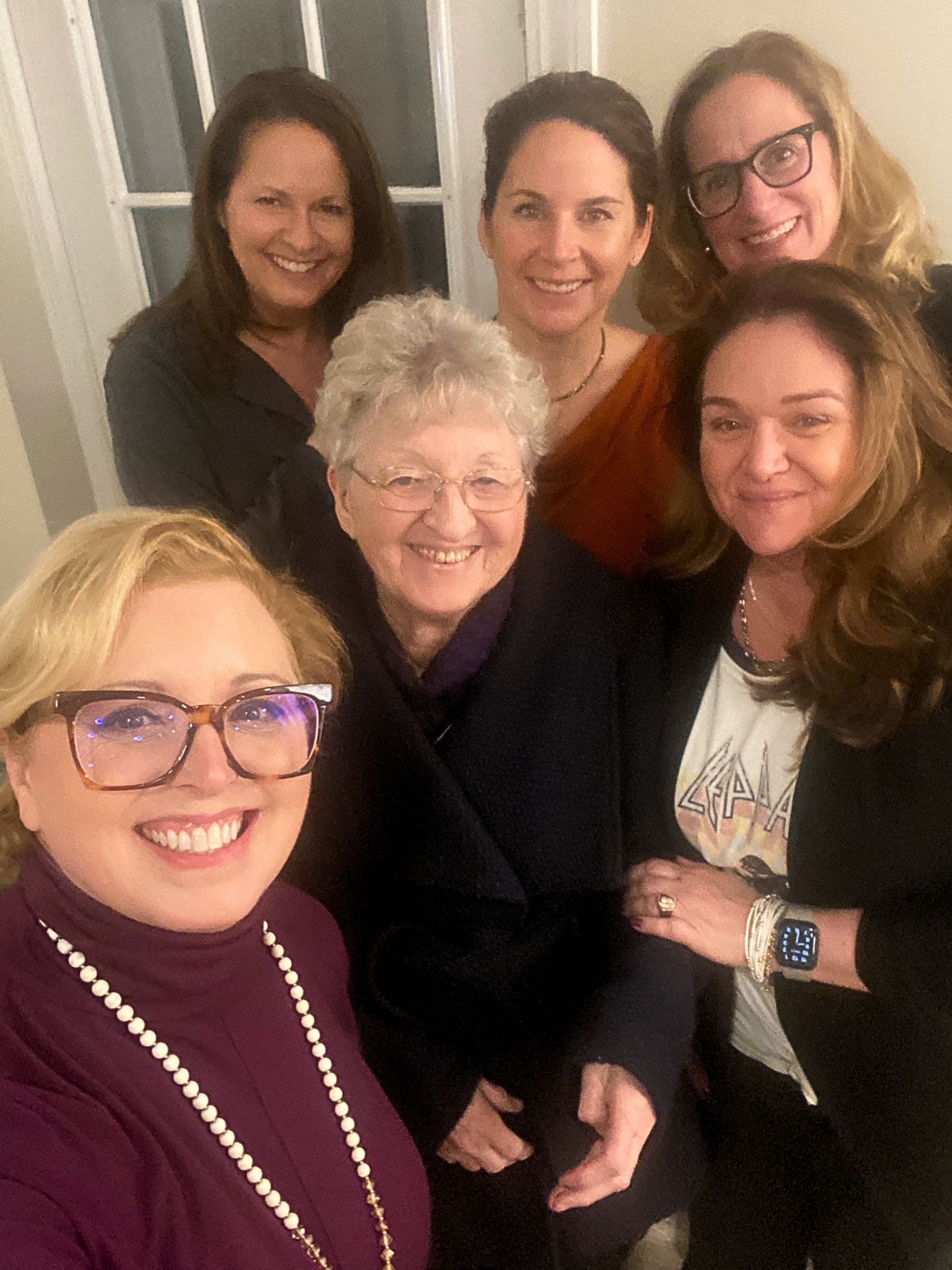
Julie Libby, Diana Fletcher, and Stephanie Perry sat in on Angie Helton's first oncology meetings. They dialed in when COVID kept them out of the room and asked questions she wouldn't have thought to ask. Two years later, the cancer came back, and they did it all again. This time, they pushed hard for a second opinion at Dana-Farber.
Life after a cancer diagnosis, from the friends' side of the table: An intimate conversation on what they built together, which they now pass on to the next friend who gets the call.
"We don't have the control. But we can control as much of the outcome as possible when we work together."-Diana Fletcher
The sweatpants rule Angie ignored
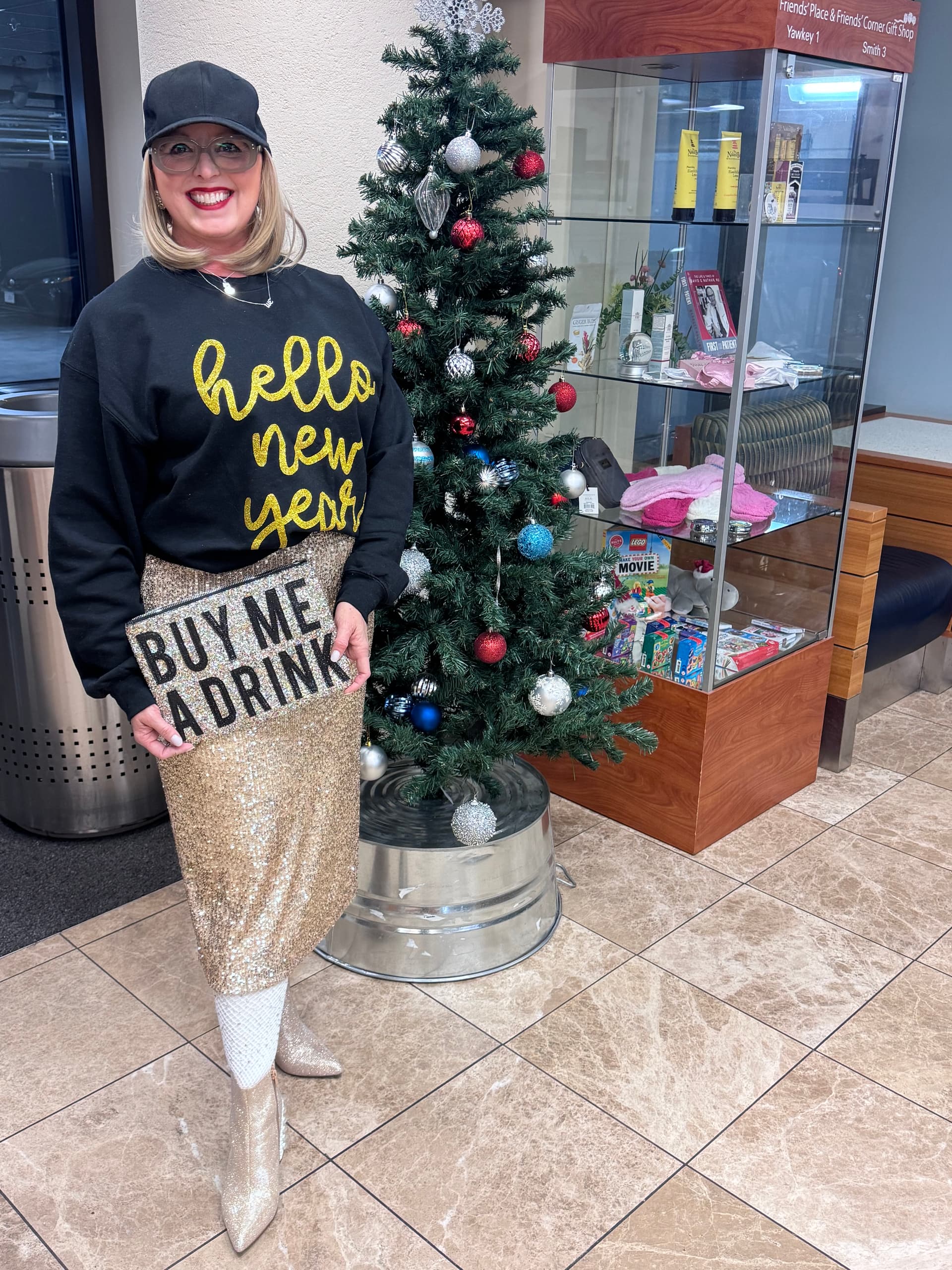
The chemo binder said to wear sweatpants. Angie Helton read that and decided it was not happening. She planned a different themed outfit for every treatment instead. Her friends drove her there during COVID and waited outside because the rules kept them out of the building. That is how they learned what supporting a friend with cancer really involves. Nobody handed them a manual for life after a cancer diagnosis, so they wrote their own. Julie Libby has known Angie since high school. Diana Fletcher is the soft one who cries. Stephanie Perry, by contrast, keeps everybody moving. Angie calls the three of them her Power of We, and this episode hands them the mic.
Round one, round two, and the second opinion nobody got the first time
The first time around, they showed up to appointments as a group and overwhelmed the doctors. Every meeting became a fact-finding mission. Afterward, they compared notes on what each of them had caught. Two years later, the cancer came back after a lump that Angie was told was probably a cyst. This time, the friends pushed for a change of course. One of them sat at Angie's kitchen table and looked up Dana-Farber. A single phone call got her an appointment. After the consult in Boston, Stephanie made the decision simple. Go to Dana-Farber or answer her. The group also settled on who could be in the room before surgery. Diana was out on account of the crying.
What to do when a friend has cancer
The advice that lands hardest is the plainest. Say you're here, then stop asking what to do and just do something. Meals showed up unrequested, and Angie shared them with her elderly parents so she could keep making their Sunday dinners. The Perry boys pulled up in pickup trucks, did the whole lawn, and put up her Christmas blowups. Stephanie talks about the days she didn't feel like walking the dog. She went anyway, because look what Angie was going through. If you're the friend or coworker wondering whether a text would be a bother, this one is for you.
This episode closes with the Katherine Ferrier poem that gave the group its name.
[00:00:00] - [Speaker 0]
My name is Angie Helton. I'm a two time cancer survivor, this is my podcast, AC Podcast, Opry Cancer, Life After Cancer Diagnosis. What that looks like when you go through it as a cancer patient, what it looks like for your friends and family and supporters, and how you navigate it beyond the pamphlets, because they don't tell you everything that you're gonna deal with. This episode is my Power of We episode, and how my support system navigated all the challenges that go with helping someone through cancer. And with me today are my dear friends who are part of my Power of We.
[00:00:32] - [Speaker 0]
Julie Libby, a longtime friend. She was my high school bestie, and we've known each other forever. She's my honest and strong friend. Diana Fletcher, who we've known forever. She's my more soft, sweet supporter who cries a lot, but we won't hold that against her.
[00:00:47] - [Speaker 0]
And Stephanie, my tough ass friend who also a great supporter, but kept me moving all the time and was always there for me. And I'm Angie Helton, by way. I forgot to introduce myself.
[00:00:56] - [Speaker 1]
Cheers. Cheers.
[00:00:57] - [Speaker 0]
To our mocktails, cocktails, whatever we may have. Before we get started, I thought I would explain a little bit about what the power of we means. After my first round of chemo, that was during COVID times, I got out for a networking event for the first time in months. One of the speakers at this award ceremony read a poem called The Power of We. And I remember tears streamed down my face, and luckily, I had a mask on so no one could really tell.
[00:01:23] - [Speaker 0]
But that poem resonated with me based on all of you and everyone who had shown up to support me through my cancer battle. I felt so grateful and so very lucky in that moment and literally became my mantra. Hence, the necklaces we wear. We all have. I will read the poem at the end of the episode so you can all enjoy it as well or hopefully get some inspiration from it.
[00:01:41] - [Speaker 0]
So now that I've done so much talking, I want to open it up to my pals here to talk about all things cancer after the diagnosis. Yeah, exactly. So how did you all feel when you first found out that I had cancer?
[00:01:57] - [Speaker 2]
Shocked and scared. Yeah. I think that would be the best
[00:02:00] - [Speaker 0]
way to
[00:02:00] - [Speaker 1]
put it. Shocked, for sure.
[00:02:02] - [Speaker 2]
Very, very scared.
[00:02:03] - [Speaker 0]
Yes. Okay, so this is one that I, this question I was kind of thinking to myself, like I didn't even know what to say and how to tell people, but what did you, did you feel like you knew what to say at that point? No. Right? Like, didn't and I didn't know how to tell people either.
[00:02:18] - [Speaker 0]
Like, was I was just blurting it out because I had no other reference to something like this. And I just would tell certain people and I made a calculated decision not to tell my immediate family until I knew all the plan and all that stuff because there's three weeks of like tests and all the things and you figure out what your treatment plan is But going to did you guys, know, you feel like you knew what to say?
[00:02:40] - [Speaker 3]
Not at all. Think it was just for me, you're the closest person that I've known to be dealing with this directly. Know, I know other people who've had cancer and I know them to a certain level, not a best friend. And it was awful. Yeah.
[00:02:58] - [Speaker 0]
So let's talk about how it began. You guys were the key folks in the room with me, and I know a lot of people who go through cancer, this is really important, is when you start having those first meetings, there's so much information thrown at you. I think everyone understands that, they get that. And I literally just had a friend recently tell me about she has cancer. And I said, are you taking some friends with you?
[00:03:21] - [Speaker 0]
And she goes, oh, yeah. You know, smart, successful woman, but she's like, it's just gonna be a lot. So you guys were the first ones in the first meeting, the first go around. And I'm just curious what that what that felt like. And for me, was great because I listen, but there was so much information.
[00:03:38] - [Speaker 0]
I didn't know how I was gonna retain it all. Yeah. Because that's just me. I'm bad at that anyway. But how did you guys like, what was that like for you guys to be in that call?
[00:03:46] - [Speaker 0]
And what do you think was roles in that?
[00:03:49] - [Speaker 1]
Yeah, mean, think it's always good. I have a healthcare background and I used to meet with families all the time, like through rehab and just medical planning and knowing all the different information and somebody might, if the more people you have, like somebody might ask a question that you wouldn't have thought about or capture something. So I think it is always good to have, you know, a group of people there, even though it can seem overwhelming and I think we overwhelm the doctor.
[00:04:19] - [Speaker 0]
Maybe a few times. Remember they were doing
[00:04:21] - [Speaker 3]
like And
[00:04:23] - [Speaker 2]
I think it also helps because then it starts you start learning what your strength is to bring to you besides, you know, love and compassion and hugs and those types of things. It's like, you have that type of medical background. You have a certain background. I have a background. How can we use that to help you and maneuver this journey as we are all starting to learn about it?
[00:04:45] - [Speaker 2]
Because at the very beginning, we learned you have breast cancer, but we didn't know what stage and the different types and the different you know the different options you had. None of us knew right? So it's like okay let's go in together let's be fact finders and let's figure everything out and really listen in and then have meetings after to say did you hear that?
[00:05:04] - [Speaker 0]
Yes.
[00:05:05] - [Speaker 2]
What do you think of this? Remember bringing those things up during those conversations.
[00:05:09] - [Speaker 3]
Absolutely. And I think you touched on the fact that you found this out during COVID and I live away in the winter and it was frustrating because, you know, the COVID added a complexity about travel and I couldn't be here as much as I would have liked in person. But I dialed in to those initial, the first go around. I dialed in to those calls and I think that helped me because not having the visual, just listening and really trying to ask questions without having the emotional response that I probably would have had and would have been less effective for me. And then we could compare notes and say, Hey, you know, or chime in, did somebody forget to ask something?
[00:05:46] - [Speaker 3]
And I think all of us ask things in a different way that I wouldn't have done on my own, perhaps you wouldn't have done on your own either, just looking at it differently. So it was very informative and you're right. A regular doctor's appointment can be a lot of information and hearing this and treatments and options and the way things are gonna go is overwhelming.
[00:06:09] - [Speaker 0]
Yeah. And thank God you guys were there. I really appreciate it. Because again, I I am the type person that don't wanna read all the stuff. I don't wanna see it in black and white.
[00:06:17] - [Speaker 0]
So I needed that support. I also think at that time, I'm sure in your minds, were trying to navigate how the fuck I was gonna react to everything too. And then how do you support Because because I know it can be a but I was gonna talk about that too, because, you know, one of the things I remember is I read when I first found out the first time around I was reading some of the documents and it was a frigging three ring binder like this big and I got to the part about the chemo treatments and what to expect and what you should they have a whole list of like what you should wear you know wear your sweatpants do this, wear something comfortable. Of course, was like, well, that is not happening. And so, you know, I made a plan.
[00:06:55] - [Speaker 0]
I said every treatment, I'm gonna wear a different outfit. It's going to be dressed up. It's going be fun. It's going to have a theme. And so I did all that.
[00:07:02] - [Speaker 0]
Because, you know, it was COVID, you guys could drive me, but you couldn't be there with me. And the conversation is driving and the support I get from that. But I'm sure, you know, you guys were like, holy shit, Angie, you're crazy because of the outfits. But I have to say it brought me so much joy. Oh yes.
[00:07:17] - [Speaker 0]
And the nurses and the staff were like, Oh, we can't wait to see what you're gonna wear next. You know, and I just, I think the one thing I would love listeners to know and viewers to know is like, it's different for everyone, right? Like mine was such a different loud and proud kind of experience. Whereas I'm sure others it's not. And I wonder how you guys felt about all of that.
[00:07:37] - [Speaker 1]
Yeah. I mean, you were your authentic self and that's how you attacked this. And, and I think at least for me that made it easier because I'm a doer and I am very much a glass half full. So it was easier to like, just like you brought on the energy anyways and I just had to help like, know, flame the fire. So it was, it just made it easier for me.
[00:08:03] - [Speaker 0]
And it's different because remember your friend Lindsay, who we found out and I started to talk to her who's, because she had found out she had cancer and this was after my second round with it. You know, spoke to her and stuff and she was more like, No, I'm definitely wearing sweats. That's fine. Everyone has to do it the way they're going to do it to get through it, right?
[00:08:20] - [Speaker 1]
Yeah. What you need to do, what works for you, right?
[00:08:23] - [Speaker 2]
And I think part of it is matching your energy level because your energy level is so high. Even when you were going through chemo, sometimes I was like, Oh my goodness, I've got I gotta pick up my game, right?
[00:08:34] - [Speaker 1]
Because after the steroids. Yeah,
[00:08:36] - [Speaker 0]
that was your pretty much my brain on fire for like two days.
[00:08:41] - [Speaker 2]
Would call one of you after and be like, Okay, what's going on? And you'd be like, remember she's on steroids right now. I'm like, woah, that was a whole different thing. Whole different personality that came out. Yeah, that's part of it, right?
[00:08:52] - [Speaker 0]
It is totally. But it was the way I was going to get through it, you know? And I, you know, feel bad. I'm gonna share a little story. Julie was so sweet.
[00:09:01] - [Speaker 0]
She bought me this book of this broadcaster who we all know, and I can't remember her name at the moment, but and she had been through triple negative. Go, I'm not gonna read this fucking book. I just won't. I can't read this book. Because I'm like, I just can't look at the black and white of it.
[00:09:13] - [Speaker 0]
And I just wanted to, I want it to be my journey. I hate using that word, but I want it to be my path and I didn't want to see how anyone else did it for some reason.
[00:09:21] - [Speaker 3]
That's important. At that time, I think that's where you were. And I just thought it was very interesting that she survived it. It was the first diagnosis and it was, you know, I know it's a very aggressive form of cancer as we read up on it after and I thought, and it was Joan Lunden I believe. And I thought how inspirational that she was able to get through it even though some of the treatments aren't as evolved for that kind of cancer as I read anyway, no expert.
[00:09:50] - [Speaker 3]
And I thought it would be helpful, she's like I'm not gonna read somebody else's cancer I'm not such
[00:09:56] - [Speaker 0]
a bitch.
[00:09:56] - [Speaker 3]
Yeah, and I'm like, yeah, I'm like, Like thanks really much.
[00:09:59] - [Speaker 0]
Put that on
[00:10:00] - [Speaker 2]
the shelf.
[00:10:00] - [Speaker 3]
Yeah, all right. Well, just give it to somebody else. Yeah. Pay it for it.
[00:10:04] - [Speaker 0]
Pay it for it, yeah. What is one moment maybe from either journey, either cancer diagnosis and treatments and all that, that you remember that was maybe a light bulb went off. Maybe it was around the treatments. Maybe it was around, not necessarily me, just like, was one moment that you're like, wow, I never knew that about going through this. That's a tough one.
[00:10:25] - [Speaker 2]
I think going back to having us all on calls, whether it was the first round, second round, either we're on a call with a doctor or we're there with a doctor and realizing the power of having power of we. Like I tie that back in, but how that helps move you forward because it's not just like you said, it's we have different disciplines, have different strengths we can bring to it And so that I wouldn't cry the whole time because I'm the crier of the bunch. Yeah. Yeah. So that gave me purpose.
[00:10:57] - [Speaker 0]
I remember saying that Stephanie, go, don't you're coming with me. She can't come in for surgery because she's going to start fucking crying. So the surgeries were a lot too. And I had people come in with me because that's, you know, you're hearing a lot before I go under and they're telling you a lot. Then they call you the one person who's with me after surgery to give you all the information too, which is a very important role.
[00:11:17] - [Speaker 0]
I mean, just so listeners and viewers know, I I'm divorced. I don't, you know, I have a support system of awesome friends. I had elderly parents that I was taking care of and I couldn't lean on my family and you guys were it. So it's a little different, you know, in those two, those two bouts with it. But the second diagnosis, it came back after two years and I was like, you gotta be fucking kidding me.
[00:11:40] - [Speaker 0]
And I had felt a lump again. And I said, no, this can't be. And they were like, oh, it's probably just a cyst. Of sudden, no, guess what? It's back.
[00:11:47] - [Speaker 0]
What did you guys think about that when you heard that news? Like, what was it that maybe you learned the first time? And I'm hoping to god no one who listens has to go through it twice. However, what did you what did we learn the first time that maybe you said, okay, we know how to do this. Let's do this.
[00:12:04] - [Speaker 0]
Or was there stuff that you're like, I don't dare do this. Let's do something different.
[00:12:07] - [Speaker 3]
I think it was very scary and frustrating that it came back. After we hit that two year mark, I think that was an important milestone. Every year was a milestone, but that was an important one. And no sooner did you have the clean bill of health, it felt like the rug was pulled out from under us. And at that point COVID was over, I was able to attend some meetings in person where you were originally treated.
[00:12:30] - [Speaker 3]
And I just felt like where it had come back, we needed to go elsewhere. We need to give somebody else a shot at this and maybe a different approach. Maybe there's studies, case studies, or things that you might be able to benefit from. And that's hard to leave your original doctors and where you're comfortable, but just change it up because, and I felt really strongly about it, it was a very difficult conversation.
[00:12:56] - [Speaker 1]
Yeah. And I think too, one thing that I felt like I learned from it was how important it is to get second opinions on the first time like remember how we all said after we went to Dana Farber like why didn't we get a second opinion but you were like we were just in and I know you were like I just want to get it done I want to get diagnosed and get the treatment started and you know you were just in the like do it mode but I think it's so important and I've learned that like use that lesson with other people in my lives that have had other diagnosis like make sure you get a second opinion.
[00:13:32] - [Speaker 3]
Even though it's such a difficult
[00:13:33] - [Speaker 1]
conversation that to a little bit longer.
[00:13:36] - [Speaker 3]
We hope if the medical staff really care and want you to be better, they're willing to accept a second opinion in that kind of situation because I think the thing that I learned is there's so many nuances to the way they did the treatment the first time around and you were like in between the stages and you were just in between and did you do radiation first or surgery and know who's to know which is the right thing to do or the best thing to do. And that was very educational for me. So I felt like with the second time, I felt a little more informed. And certainly the second time you take a different approach because the first time it didn't work. Right.
[00:14:19] - [Speaker 3]
You know? And we're hopeful that the second time
[00:14:22] - [Speaker 0]
Yeah. I remember sitting at the table in my kitchen after we had our meeting with the health care providers here, and you were sitting there like, I'm looking up Dana Farber. I'm gonna figure out how you get in. Thought, oh, is gonna be so hard. It's gonna be like the insurance everything about it.
[00:14:40] - [Speaker 0]
I'm sure they're so you know that you can't get into that easy. I remember you made one call. I'm sitting there doing other stuff and doing insurance stuff and you made one call and talk to somebody and they're like, okay, let's get her in. Here's your appointment.
[00:14:51] - [Speaker 3]
They're wonderful. It was wonderful. They
[00:14:54] - [Speaker 0]
try to help. And we went to those appointments and I remember walking out. It's so different when you meet with all of them. It's like they march in. I remember the six foot tall blonde doctor who had the pumps on.
[00:15:04] - [Speaker 0]
I was like, I love her already. She marches in and she just starts talking science. And she just starts talking about, here's what we know from these studies. Here's what we know from this. And that I loved.
[00:15:13] - [Speaker 0]
I know some people that's hard to hear some of that stuff. They don't want to know all that stuff. But it was I felt it really educational and fascinating. But I remember walking out of that, and Stephanie goes, if you don't fucking go to Dana Farber, I'm gonna kill you. And I'm like, okay.
[00:15:25] - [Speaker 0]
Because I would ask a lot of questions at the end of it. And I remember you I remember it probably sounded like I was asking questions like, I'm leaning to stay or whatever. And I'm like, no, I'm coming. And then there was that whole process of going to Boston, you know, because we live in Maine. It was a two hour thing, but, you know, we all just made fun with it.
[00:15:42] - [Speaker 0]
And I found my favorite hotel, the Verb, you know, yep, which was, yeah, I gotta get a shout out to those. The staff was awesome. And, you know, it's a rock and roll theme hotel. It was just great. So, you know, now that we've all been through this and what I'm hoping people get from this podcast is like things that can help them if they're a cancer patient, cancer survivor, someone who's gonna support somebody.
[00:16:04] - [Speaker 0]
What would you tell somebody if like, if a friend had cancer, what would you tell them? Knowing what you know now, like from somebody else, like a best friend or somebody else.
[00:16:14] - [Speaker 2]
I would say to just lean in to be, you know, as you said, we didn't know what to say at first. We were scared. Just say, I'm here for you. What can I do for you? And just know that maybe you won't say exactly what you need and everybody's different, but just know that you can step up and make a difference.
[00:16:32] - [Speaker 2]
That really is the first thing. I mean, I came into it like I've had friends who passed away of cancer. We've had friends who passed away of cancer and other diseases, and it's very difficult. And some of us, we don't like going to hospitals. We don't like that whole process.
[00:16:49] - [Speaker 2]
But sometimes you just have to step up and do it.
[00:16:51] - [Speaker 0]
Right. Right. But you also find, don't you find like, I know for me, I needed people to, I didn't want to tell them what to do. Needed them to figure out
[00:16:58] - [Speaker 2]
what to And that's what it is to say how can I help it if they're not saying what they need just start doing something?
[00:17:05] - [Speaker 3]
Right. You want to to ask and I think that was and one of the things I think because I heard about it a lot and everybody who knows me knows I'm not much of a cook but I think the meal prep and the things that people brought to you without having to ask you and worry about do you like this, do you like that, just do it. And if it works, it works and you don't have to ask. I know you're not the kind of person that likes to ask for help. A lot of people don't.
[00:17:30] - [Speaker 3]
And I think to your point, if you just step in and do it, it takes the pressure off you and you may not enjoy the book, Or you may not enjoy the meal, it's there if you All need it or if you want of is helpful.
[00:17:45] - [Speaker 0]
Of it is very, very helpful. And you need to get a lot of food. Would also because she's also working with toddler as well. Yeah, that's right. And I actually shared a lot of the food with my parents too at times so that I could still take Yeah, care of yeah, it was great.
[00:17:57] - [Speaker 1]
I think I think one of the things it's having been around people who have gone through cancer, I think it's finding, allowing them to have some normalcy in their life so whatever you can do to support that so whether you know so that you don't have to ask for things but knowing things that you like or it was very important for you to still take care of your parents yes As frustrating as it was that you had to do that, that was important for you. You know you have a home like making sure your house is taken care of and those things and there are people there's always people that want to help, right? It's the first thing when they hear somebody's sick or needs something. They're like, what can I do? And so just helping to coordinate that so you don't have to, but it still allows you to like do your day to day.
[00:18:48] - [Speaker 0]
Yeah, like that's a really good example because I'll never forget the Perry boys. Everyone showed up in the pickup trucks and did my whole outdoors, lawn, everything, plantings, all that stuff, and then put up my freaking Christmas decorations just because I was like, you know me, I gotta have the blow ups and the whole thing. And it was stuff like that that I didn't even think of. I was thinking, well, screw it. My lawn's gonna be what it's gonna be.
[00:19:07] - [Speaker 0]
But it made me happy that that was taken care of. It was great. I think the one thing I'm curious about from you guys is, knowing that I had the first battle, then the second battle, How do you, like, take care of yourself to keep showing up? Because that's hard as supporters too. So how do you take care of yourself to keep showing up?
[00:19:27] - [Speaker 1]
Yeah. And I'll say there are days I know you love to walk with Milo and that was a daily and Milo loved loves Angie still looks for Angie when we walk but there were days I was like I don't feel like going and walking but I'm like Jesus stuff look what Angie's going through, get your ass out and do it. It was, you know, so I did. There were times I had to just, you know, we all have jobs too and working and then taking care of you and the other things in our lives but it's just what you do and just knowing that it was helping you.
[00:20:04] - [Speaker 3]
I think Angie makes it very difficult to just sit back if she's Right,
[00:20:10] - [Speaker 1]
that's with
[00:20:10] - [Speaker 3]
the energy that she had during the treatment and what she brings and what she looks forward to, I think that was motivating us to step up and be more present even if we had days that maybe we weren't up to it for whatever was going on in our lives. I think that you had a very high bar for yourself we need
[00:20:29] - [Speaker 1]
live up to it.
[00:20:31] - [Speaker 2]
Had more energy than anyone ever, ever. I know. But it's true. I feel as though you set a stand, like you set the level and we were rising to that. We really were.
[00:20:43] - [Speaker 2]
I mean, really.
[00:20:44] - [Speaker 0]
Well, you.
[00:20:45] - [Speaker 2]
But not just saying that
[00:20:46] - [Speaker 0]
you just have to do that.
[00:20:47] - [Speaker 2]
Really seriously it's very true. You really had that energy level and we sometimes I'd be like and then I like Angie's there. She's getting dressed. We're going out for happy hour or whatever it may be. We're going to do that because you know, were the we wanted
[00:21:02] - [Speaker 0]
to do. Guys were awesome. I seriously have so much great gratitude. One of the things I think too, which I found interesting was some people would be like, don't know. I don't know how many, you know, should I reach out?
[00:21:16] - [Speaker 0]
Do I bugger with a text? I bugger with a call and email. I got so many texts and emails from people in my network of colleagues and work and all that that were just random. And they would check-in and I'm like, that was just awesome. It just, you know, I didn't ask them to do it.
[00:21:31] - [Speaker 0]
I didn't expect it. And it was really thoughtful. I thought that was really, really nice. So I I would say to people like, don't ever don't ever not reach out. Like, I think people will accept that.
[00:21:42] - [Speaker 0]
I would hope, you know, and it's a good Yeah.
[00:21:44] - [Speaker 3]
I think because people don't know what to say. Right. And so it's easier sometimes to sit out. Right. But even if it's someone that you know peripherally or through work and it's not a super personal relationship, it still means something that people care.
[00:21:56] - [Speaker 3]
You're not by yourself. Yeah. You're not alone.
[00:21:58] - [Speaker 0]
I had a friend of mine call me. What's happened now, having gone through it twice, is people call me when they hear a friend has cancer and like, we're gonna do a gift basket and do all this stuff. What what do you think we should put in it? And I'm always like, you know what? What who is this person?
[00:22:13] - [Speaker 0]
And what do they like? What do they want? It's just it really is so different. And some, you know, some people don't wanna talk about it. They don't wanna be reminded of it.
[00:22:22] - [Speaker 0]
Some people, you know, get kinda down and they need you know, I needed energy therapy. I did that all through it. So I said, I think these gift baskets have to be very, very personal to what yes. Is there some basic things? A water bottle is great, you know, all those things, but it is personal to everyone.
[00:22:39] - [Speaker 0]
You just have to kind of know that take that into account when you're putting something together like that, just do it about that. And it doesn't have to be F cancer this, F cancer that. Some people don't like that stuff. You know, it's all the things. Okay.
[00:22:52] - [Speaker 0]
So feel free to ask me any questions. Turn it on me if you want. Woah. Before we end.
[00:22:59] - [Speaker 1]
Was it hard for you to keep the energy level up?
[00:23:05] - [Speaker 0]
No, I don't know. But and I will say, like Diana said, that's my personality anyway. Mhmm. So I don't and I knew I don't I didn't see myself changing that. I also knew for me, had to stay busy, and I had to have something to look forward to and I had to have I worked all the way through it took care of my parents and work kept kept me sane and organized and all that and part of work was on my to do list call this doctor about this or do this.
[00:23:34] - [Speaker 0]
So it was part of my to do list every day, but it wasn't like at the top of my list always. Was take care of mom and dad, take them a meal, you know, do that kind of thing. So hard, no, because that's what kept me going. But was I ever alone and scared?
[00:23:52] - [Speaker 2]
Fuck yeah.
[00:23:56] - [Speaker 0]
A 100%. But you just kind of put that aside. Especially the COVID time that was
[00:24:05] - [Speaker 2]
a little challenging.
[00:24:06] - [Speaker 3]
Always anyway, right? Yeah. Right. And I think that, as you've mentioned, I think to me what brought so much comfort to you is the care for your parents.
[00:24:17] - [Speaker 0]
Yes, yes. It's such a
[00:24:18] - [Speaker 3]
big part of your life and you were losing control. And I think that the meals and all the things that you were able to do to keep up with them because I know they sort of acted like nothing was going
[00:24:29] - [Speaker 0]
because it it seemed normal. I was just dropping it and then except I didn't have hair and I wore the scarves.
[00:24:34] - [Speaker 3]
And and you know, you still brought the energy and all that and they were still giving you lists and things to do.
[00:24:39] - [Speaker 1]
Still making them Sunday days.
[00:24:41] - [Speaker 3]
There's something very comforting about that. Yeah. But knowing that you still Keeping it normal. Absolutely.
[00:24:46] - [Speaker 0]
Keeping it real.
[00:24:47] - [Speaker 3]
They were your kids. Yep. Exactly. In that moment.
[00:24:50] - [Speaker 0]
Yep. So before I read the power of we poem so we can all understand sort of what that means, I'm just curious, you know, after we've all been through it, what does the power of we mean to you? I'll put you on the spot. Want put me on the spot? I at this.
[00:25:06] - [Speaker 0]
Know you're
[00:25:07] - [Speaker 2]
I mean, I think it goes back to, you know, this group, this group and other people who've been part of your journey and helped you all the time. It's so much more powerful, powerful than just you yourself. And I mean, it's very simple to say that, but everybody brings their own little special sauce to it, right? Everybody brings something very special. And sometimes in our day to day lives, we like to take over and think that we have the power and we know how things are going to end and we want the control.
[00:25:43] - [Speaker 2]
We don't have the control. We don't have the control, but we can control as much of the outcome as possible when we work together. And that's really what we did. And you know, just you were the leader, even though you were the one we were helping out, really? Yeah,
[00:26:01] - [Speaker 3]
the ring leader.
[00:26:02] - [Speaker 2]
Ring leader. Between the energy and also the optimism, the one thing we have not talked about is that you were always optimistic about it, at least to us.
[00:26:12] - [Speaker 0]
Yes. And I was, I actually had no, told myself I can't believe any other way. You know what I mean? Kept saying that to myself. Like, just got to battle this and get through it and get on the other side.
[00:26:22] - [Speaker 0]
It's all going to be good.
[00:26:23] - [Speaker 2]
And that's, and that direction led everyone else, Even though some of us would ask each other, we'd call each other. What do you think? How's she doing? You know, we would ask, that. But as you said, not everybody has that in themselves as they go through this journey.
[00:26:38] - [Speaker 2]
So that's why they're taking it from other people and they're taking that energy from other people. Right. And that's a good thing.
[00:26:43] - [Speaker 0]
Yep, it is good. Very good. You guys were awesome. Do you wanna add anything else?
[00:26:49] - [Speaker 3]
I just, I appreciate that the, you know, a positive to come out of this is getting to know each other that much better for a common cause who you have so many friends in different pockets of your life and has sort of brought somebody who's known you since freshman year in high school and been friends and another friend from high school to people that you've met more recently whether through professional connections or whatever and we all got to know each other that much better and that was really positive for
[00:27:16] - [Speaker 0]
me. And
[00:27:18] - [Speaker 1]
I would say too just having helped see your journey and help you through it, and getting to know, everybody here, but also you being part of other people in my life, life that have also been going through some things and you helping them like that they knew about you because I told about the outfits and all the things you know that Angie did and then when you like you came to my work one time they were like this is Angie then you know unfortunately I had a friend that you knew that was diagnosed with the same type of cancer and you helped her through her journey so I think there's just so much if you do these things in isolation you miss out on so much of paying it forward, helping each other, and opportunities that you would never have.
[00:28:08] - [Speaker 0]
Exactly. Now that we've all gone through this a lot, do you have any advice that you would give somebody like one of our listeners who may be supporting someone, like on what they should do, what they should read, what you know, any advice? I'm trying
[00:28:23] - [Speaker 2]
to think. The first thing that I did, I cried, of course. Surprise, surprise, yes. I also leaned on another friend who you know, Sherry, whose husband is in reconstructive surgery. And my friend had also dealt with many breast cancer patients at her previous position.
[00:28:41] - [Speaker 2]
And I knew I let her know that I let you know that I was talking with her because I was just like, what is going on? Like, does this mean? What does this mean? You know, and she, having that health background, was able to kind of guide me and help me. Then I would go and I had to I'm kind of one of these people who needs I need to look.
[00:28:59] - [Speaker 2]
I need to research. So I did look up and I really had to formulate, you know, what what it meant. Right. And I had to take time to myself and not cry in front of you all the time.
[00:29:10] - [Speaker 0]
Because I'm a crier. No, appreciate you doing that. Yes. I would have cried too.
[00:29:14] - [Speaker 2]
But I think that everybody's different. You know, with when your best friend, you you find out your best friend has cancer, you're like, Okay, take a deep breath. How do I handle this so that I can be strong for her? Right. And I think there were probably times when you would be like, well, we joked about when I could and could not see you.
[00:29:34] - [Speaker 0]
Right. And I did I go don't bring Diana, she's gonna cry. And I'm gonna cry too. And it's drive gonna me insane.
[00:29:40] - [Speaker 2]
Before you said So we knew
[00:29:42] - [Speaker 0]
the lanes a little bit, but was there anything you would say for advice?
[00:29:50] - [Speaker 1]
Like Diana said, people deal with it differently, and I think it is important that you have, that you give yourself an outlet because it is hard and it's a big weight to carry because you do have to be strong when we're in, you know, in front of your presence and I am not a crier. I wish I could cry more, but I'm not. And I do it in different ways. I, you know, have my own outlets. But self care is really important.
[00:30:19] - [Speaker 1]
And I think that's the biggest thing that people, most care providers, whether you're taking care of your parents or your children or sick friends, you've stopped taking care of yourself. And that's not going to do anybody any good. So I would say making sure to do self care.
[00:30:37] - [Speaker 0]
Very good. Any advice?
[00:30:39] - [Speaker 3]
I think when you first hear someone very close to you having a diagnosis, it's sheer terror. And I think trying to find the balance of showing that emotion but still being strong but not so strong that it comes off as you don't care. And sometimes for a crier, you want to be very stoic and tough for you and sometimes that's not what's needed. And sometimes as a caregiver, it's not what you need either. And just trying to strike that balance of being there and being positive but being real, Being honest as you described me initially and I think that was something that I had to learn.
[00:31:23] - [Speaker 3]
I'm not sure I did it well but it's something you learn.
[00:31:26] - [Speaker 0]
Well you guys all did everything really well because you got me through it twice for fuck's sake.
[00:31:30] - [Speaker 1]
Oh. And that's the last time.
[00:31:31] - [Speaker 0]
Yeah. Exactly. That's it. That's it. But I love you all.
[00:31:34] - [Speaker 0]
Thank you so much for being part of my Power of You guys are awesome. So I'm gonna read the poem now. I'm gonna hand it around so we can all take a stab at it because I I'll cry all the way through it. The power of we. It is not new to say we are stronger when we stand together, but still we must say it every morning like a prayer.
[00:31:50] - [Speaker 0]
We keep repeating until it reminds us of pine standing side by side, how they weather the wind, how they withstand the worst of whatever winter brings. We must say it so we don't forget that alone we are merely thread, single strand, easily snapped, but woven. We are sturdy cloth, and what's more, we can keep each other warm. We must say it so we don't lose hope when the news is dire and the wind turns cold and the leads are falling and our fears call out to us from every dark corner.
[00:32:18] - [Speaker 2]
We must say it when the day is almost out of hours and we have forgotten what it even means to know safe passage, safe harbor, safe home. We
[00:32:29] - [Speaker 3]
must say it as another way to say, I am here beside you. We must say it so we don't give up.
[00:32:37] - [Speaker 0]
You get the longest heart. I know, great.
[00:32:39] - [Speaker 3]
The noncrier.
[00:32:40] - [Speaker 1]
Yep. The revolution at hand is demanding new languages, new grammars, where sentence meets song, where our bodies together make poems in the streets, where we is a dictionary of interlock and overlap, and overcome and come together, where the words that mean welcome need more than one voice to be sung.
[00:33:01] - [Speaker 0]
Thank you. And this poem is by Katherine Ferrier. I think that's how you say it. Ferrier. Ferrier.
[00:33:07] - [Speaker 0]
Yeah. I'd love to have her on the podcast at some point. Well, thanks again. You guys love you. I think
[00:33:12] - [Speaker 2]
that's you. Yeah.
[00:33:14] - [Speaker 1]
Happy. Very And
[00:33:16] - [Speaker 3]
remember girls, it's only Wednesday.
[00:33:20] - [Speaker 2]
You for that.