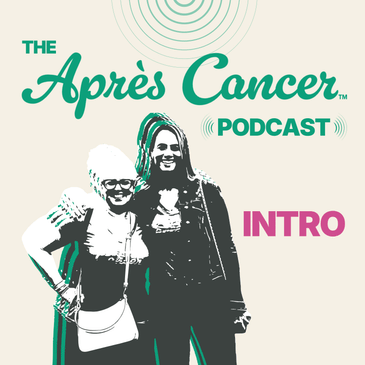


Après Cancer is a podcast about life after cancer diagnosis, for people who have heard the word and for everyone around them.
This first episode introduces host Angie Helton and guest Quincy Hentzel. Both have been in the room where the doctor says it. Both came out the other side. Neither talks about it the way the brochures suggest.
Key Topics
[00:00:00] - Angie introduces the podcast and its unfiltered approach to surviving cancer
[00:00:52] - The goal of the show: education, real stories, and support for patients, survivors, and caregivers
[00:02:24] - How cancer changes your outlook, priorities, and sense of what matters most
[00:04:08] - Angie’s first diagnosis: finding a lump, triple-negative breast cancer, and treatment at Dana-Farber
[00:06:48] - A second diagnosis in the same spot and the shift to more advanced treatment
[00:11:58] - Quincy’s rare throat cancer story and how a dental scan caught it early
[00:14:35] - The emotional reality of diagnosis, privacy, and not wanting to answer questions before you have answers
[00:18:36] - Support resources, including the Dempsey Center and free integrative services
[00:19:45] - The bright spots: community, gratitude, travel, and a renewed appreciation for life
[00:23:14] - Future guests, including doctors, therapists, survivors, and spouses of cancer patients
Angie's Story
Angie found a lump on the night before New Year's Eve 2021. She was headed to Provincetown when she felt it. Tests started in January. Three weeks in, the diagnosis came: triple-negative breast cancer. That is the aggressive kind, the one most likely to spread.
Treatment moved fast. Eight rounds of chemotherapy. A lumpectomy. Sixteen rounds of radiation. In the middle of all of it, she drove eight supercars through northern Italy. She had the trip booked, and her oncologist told her to go. She spun out a Ferrari on the track. She came home and finished radiation.
She was deemed cancer-free. In July 2024, she had a clean mammogram. Two months later, she found a lump in the same exact spot. Triple negative breast cancer, again. A friend got her into Dana-Farber in Boston. Her support team heard the Dana-Farber doctors and told her, point-blank: "If you don't fucking go here for treatment, we will kill you."
Second round: chemotherapy plus immunotherapy. Surgery. No radiation. She had already received the maximum safe dose. She finished immunotherapy at the end of November. She is cancer-free.
The Wisdom Teeth That Caught the Cancer
Quincy Hentzel is Angie's close friend. She also went to Dana-Farber. Her cancer was a different kind entirely. Quincy has wisdom teeth that she never had removed. Her mother is a dental hygienist. She knows how that sounds. She went to an oral surgeon for a jaw scan. The scan found the tumor: stage one throat cancer, caught at the earliest possible stage by accident.
Her doctor told her it was lucky the wisdom teeth had never come out. Without that scan, the tumor would have progressed undetected. Quincy had two endoscopic surgeries. No radiation, no chemotherapy. She is on the monitoring schedule now, going in every few months for scans, endoscopies, and blood work.
She is also, as of this recording, newly 50. She used to dread getting older. That changed.
What Life After Cancer Diagnosis Really Looks Like
Angie and Quincy are not the same kind of patient. Angie dressed up for every treatment and roller-skated into her last chemo appointment. Quincy kept it private until she had answers to give people. This show makes room for both.
In this episode, they talk about the waiting period no one prepares you for. They talk about withholding the diagnosis from elderly parents until a treatment plan is in place. They talk about finding out their friends were more frightened than they were. These are the conversations the official literature skips.
Upcoming episodes cover sex and intimacy after treatment, the spouse's experience, cancer science and new research, mental health, nutrition, and stories from people who went through it their own way. If one person takes one thing from this show that helps them get through it, Angie says, that is enough.
Relevant Links
Dana-Farber Cancer Institute: https://www.dana-farber.org/
Dempsey Center: https://www.dempseycenter.org/
National Cancer Institute – Triple-Negative Breast Cancer: https://www.cancer.gov/types/breast/patient/breast-treatment-pdq
American Cancer Society – Throat Cancer: https://www.cancer.org/cancer/types/throat-cancer.html
Breast Cancer Research Foundation: https://www.bcrf.org/
Cancer is terrifying, but no one has to navigate it alone. This conversation makes space for the fear, the humor, the frustration, and the unexpected moments of strength that can show up when life gets turned upside down.
If you’re a patient, survivor, caregiver, or someone supporting a loved one through cancer, this episode offers a real-world perspective, practical encouragement, and a reminder that every story matters.
Transcript
[00:00:00] - [Angie]
My name is Angie Helton. I'm a cancer survivor, and this is my podcast, Après Cancer. Surviving cancer with sarcasm, sex talk, and zero filters, and a few f bombs along the way because, well, it's fucking cancer we're talking about. And this is not gonna be all about my story. This is our first episode.
[00:00:27] - [Angie]
I'm here with one of my besties, Quincy! And this is exactly not what the doctor ordered, but it's our martinis. Mine is slightly dirty. Filthy dirty. Of course.
[00:00:38] - [Angie]
You whore. And you
[00:00:39] - [Quincy]
what? It's 05:00 somewhere.
[00:00:43] - [Angie]
In this podcast, well, maybe you want to know more about it, I don't know.
[00:00:46] - [Quincy]
Tell us.
[00:00:47] - [Angie]
Yeah, so
[00:00:47] - [Quincy]
tell us about Après Cancer. What is this, and what are we doing here on the podcast?
[00:00:52] - [Angie]
Well, I'm hoping that this podcast will be something that is super educational for folks, but a lot of fun too, because having gone through cancer twice, I'm a cancer survivor second time around, and you went through it as well, that we'll have some discussions around some of the things that may surprise you, some of the things you didn't expect, but also do some things with some of the doctors on what the new studies are showing and what else is out there. We might have some therapists on who will talk about the different therapies that can help you through it mentally, and exercise and diets and all those things. But really something educational. I've been really passionate about this because, you know, having gone through it twice, losing my hair twice, doing all the fucking things you do as you go through it, it's like, I feel like I've learned a lot and I feel like you probably know a lot. Then, there's also the part of it that is your support team.
[00:01:41] - [Angie]
Right. And what does that mean for them? And that's a lot. And so I want to do something on spouses who've had to deal with this with their significant other and what do they go through and what's some good tips for people, you know, things like that.
[00:01:52] - [Quincy]
Yeah, I think the Après Cancer to your point, it's clearly people who have gone through cancer. This is going be incredibly meaningful to them, but everyone is touched by cancer in some way. Even if you haven't had it, I guarantee everyone has had a loved one who has gone through it and it impacts everybody and so I think just the stuff we can talk about on this podcast will be really meaningful for people who have gone through cancer but even for people who haven't but are there supporting their loved ones and their family and their friends that are going through cancer as well.
[00:02:24] - [Angie]
Yeah, I mean, me, when I first figured out Après Cancer as a brand and that I wanted to do something with it, it was about your life after cancer diagnosis, right? Like, because that's shit happens, and things change in the way you're thinking about things and what you're doing. I mean, a lot changes, but it also changes your outlook on what's important to you, too, which I know is super cliche, but it happens, you know? I mean, like, I want to hear other people's stories. Like, if you go to my website, aprescancer.life, you know, my story is there.
[00:02:55] - [Angie]
It's pretty detailed. But I want to hear from a lot of other people and see how they I handled it in a way where, you know, I dressed up for every chemo treatment. Like, I wanted to keep myself looking good, feeling good, and having some fun with it. And I had themed outfits and all that, and I roller skated into my last chemo appointment. Stupid stuff like that, the point where my doctor was like, Hey, you've to take those fucking skates off because you're a liability, but hey.
[00:03:21] - [Angie]
But others don't go through it like that. Others don't have that kind of attitude. They don't want to talk about having cancer. They would probably never wear this t shirt. Right.
[00:03:29] - [Angie]
So I want to hear from other people about is it like for them and how do they manage it, because it might help someone. And if one person listens to this and gets one little nugget of information that helps them deal with whatever it is, whether they're the cancer patient themselves, or the supporter, or just somebody who's in the world of cancer, I'd
[00:03:48] - [Quincy]
be very happy about that. So what is your cancer story? Because you have gone through cancer twice, pretty close back to back, both diagnoses, and you've just recently come out of the second round of cancer. So maybe talk a little bit about what your story is with your cancer diagnosis.
[00:04:08] - [Angie]
Sure. Back in the 2021, it was the night before New Year's Eve. I was headed down to P Town to hang out with all my gay boys down there, and I found a lump. I was like, Holy shit. And it was like a lump and I thought, well, isn't it felt like a friggin' marble, you know?
[00:04:27] - [Angie]
I'm like, this is pretty significant. So, got in immediately in January, and all through the month of January to start off 2022 was, What is this? What's happening? All the tests that you go through, and you wait, you wait, you wait. So, three weeks in, they tell me it's triple negative breast cancer.
[00:04:41] - [Angie]
Which, of course, is not the one that you want to hear because it's the worst, blah blah blah blah, and it can spread. So then it was a fast track into, Okay, what are we going do for treatments? And you meet with all the doctors. I had an F cancer team of women who went with me to the appointments so that, you know, when you're hearing all the information, it's so much, and you can't keep track of it. And even if you're sitting there taking it, you're just overwhelmed.
[00:05:03] - [Angie]
So I was really lucky to have a support team that was with me, taking the notes and all that stuff. So the first time around, I did chemo, I think it was eight treatments of chemo, a lumpectomy surgery, and then 16 rounds of radiation. Once the surgery is over, they deemed it all pretty much cancer free, however they do the radiation to make sure they got everything. So it was just a way to kill everything in that area so that it doesn't travel to the lymph nodes. And in between that, I said, Well, life's a little too short, isn't it?
[00:05:32] - [Angie]
So I had planned this F cancer tour and I had found this ultimate driving tour where I was going to drive eight supercars, like two Ferraris, two Lamborghinis, Porsches, all that, through Northern Italy into Switzerland and back. And I had some complications after the surgery, and I had this trip booked in the September, and the complications made me delay. I should have been done radiation by mid September, but I wasn't. So I had a conversation with my doctor and I'm like, Look, I don't want to not go on this trip. He goes, Well, because the surgery did so well, you are cancer free, go on the trip, come back, and then you have to start radiation the minute you get back.
[00:06:16] - [Angie]
Okay, great. So I went and drove my fast cars, had a blast, loved it, and then came back and spun out a Ferrari on the track, which was really fun, and then came back and did all the 16 rounds of radiation, and then, whoo! You're cancer free, great! Two years later, go in, in 2024, I guess it was, yeah, and did my July mammogram, and they said, You're clear and free, and go on your happy way for a year. In September I felt a lump again, and they totally missed it.
[00:06:48] - [Angie]
And they're like, oh, it's gonna be a cyst. Yeah, well, what? Wasn't. It was a fucking cancer back again. It was triple negative again in the same spot.
[00:06:56] - [Angie]
So, fast forward, my girlfriend was like, well, you're not staying in Maine for your treatment, you're gonna go to Dana Farber. She got on the phone, got me into Dana Farber, which was super easy. It seemed like overwhelming at the time. I'm thinking, I'm never gonna get in there, like, that's top notch, world class, you know? She picked up the phone, it was the easiest process, and I was down there for a consultation after I'd seen all the doctors here in Maine that I had had before, and all my team went with me for that, then went to Dana Farber, And everything about that was so different in terms of the science.
[00:07:30] - [Angie]
They walk in the room and they're like, Alright, here's what the study says, and here's what we're going to do. And boom boom boom boom boom, and you just feel so confident about your care. And I'd asked all these questions, walked out of the room, and my girlfriends go, If you don't fucking go here for your treatment, we will kill you. Like, that's just it. Because they'd heard both different scenarios of what was going to happen, and when they listened to the Dana Farber doctors, were like, No, you need to go here.
[00:07:55] - [Angie]
It's the second time around, within two years of what you had before, you need to do it here. So, fast forward, I did all the treatments there, it was fantastic. This time around they added immunotherapy to my treatments, which was a new thing before they didn't have that when I had it the first time. And then we did surgery. We can talk about this another time, I had complications with that, blah blah blah, I'm now a Uniboob.
[00:08:20] - [Angie]
All those things, we can talk about that another time, another episode. They could not do radiation because I had had the most radiation you could possibly have for one person. So, I'm cancer free again, and now I go back for, I had to do immunotherapy again for like, till the November, just to kind of keep that going, that keeps it at bay, evidently, and that's the new science that they've shown at Dana Farber studies. And so now it's just about going in to get blood work, to get checked, all those things.
[00:08:52] - [Quincy]
So I know from my own experience and just everyone that I know who has been diagnosed with cancer, hearing that C word is so hard and you had it not just once but twice and pretty close to each diagnosis. Like what was that? How did that feel? Like what were you thinking about when you thought you were in the clear? Right.
[00:09:17] - [Quincy]
And then, bam! Like, another diagnosis, almost the same exact thing.
[00:09:23] - [Angie]
Right.
[00:09:24] - [Quincy]
What were you thinking? What was going through your head? How did you manage to get through that whole process? Because I know how overwhelming it is just hearing the C word once, you had like a double whammy with it.
[00:09:36] - [Angie]
You know what, it's funny, I was super scared the first time, and my girlfriend had got me a book the first time and said, You might want to read this. I never wanted to read anything in black and white. I just wanted to listen to the doctors, do what I had to do and get at it. Second time around, same kind of thing. I was just like, Well, here we go.
[00:09:54] - [Angie]
But I had this weird confidence around Dana Farber and the doctors, and they had not seen this before this quickly. It was rare that they'd seen it come back quickly, but they knew they had the right tools to figure it out, and that we had caught it early, too. So I just went in it and said, Well, stay positive, fuck it, we've to do it again, and here we go. And just did the best I could to be the best patient, and tried to keep my spirits up, went to my energy therapist like crazy, and I know you shouldn't be probably drinking during chemo, but I did have my martinis once in a while, to keep me sane. Today is not the day
[00:10:33] - [Quincy]
to quit drinking.
[00:10:34] - [Angie]
No, fuck no. So, yeah, it wasn't easy hearing that word again, and you know what it was? It was frustrating. Especially because, knowing that I had been there in July, they're like, Yeah, you're good. You just And then, two months later, I'm feeling a lump, I was like, Mother.
[00:10:53] - [Angie]
So, was just more frustrated. And what was interesting, I could tell my friends were more scared than I think I was, which made me think, well, I'm gonna just not, and I'm gonna just do, and we all just gotta buck it up, and it's gonna be okay. And that's what I did. And I get it, like, that's not normal, which we know I'm not fucking normal. No, absolutely not.
[00:11:19] - [Angie]
Mean, look at these stupid shoes. But yeah, and I want to hear about your story, because yours is quite interesting as well. And your cancer is very rare. And what's interesting is we've been such good friends for so long, but during your cancer diagnosis and battle, you didn't talk to a lot of people about it. And you were not as bless you, you were not as out there as I was about it.
[00:11:46] - [Angie]
And I get that, that's kind of the point of this podcast, is that everyone's story is going be so different. So I'd love to hear about you hearing that word, and tell us about what your cancer was like too, which is completely different.
[00:11:58] - [Quincy]
Yeah, mine was definitely a different experience. I feel like in the world of cancer diagnoses, was pretty lucky. I got diagnosed with throat cancer and every single person I have told that I've had throat cancer, their first question is, Oh my god, how did you catch that? Fascinatingly, I went to an oral surgeon. I have wisdom teeth.
[00:12:22] - [Quincy]
I also have a mother who's a dental hygienist and somehow I have like these awful teeth and I have all my wisdom teeth that probably need to come out. But that I think saved my life that I have wisdom teeth and I needed to go to an oral surgeon and I needed to get a scan of my jaw and my teeth. So I got the scan to see about getting wisdom teeth removed and that's where they found the tumor in the scan. So completely random, caught it super early. Even my I too went to Dana Farber.
[00:12:54] - [Quincy]
I just kind of you hear the c word and I just kind of jumped to Dana Farber immediately. And my doctor there, who was amazing, I agree with everything you said about Dana Farber, he said, I am so, so lucky. I was complaining about my mom. Love you, mom. But complaining about how I could have a dental hygienist in my family and still have like wisdom teeth and like a baby tooth.
[00:13:20] - [Quincy]
It's like the But shoemaker's kids have no my doctor said it was a blessing that I had never gotten my wisdom teeth out.
[00:13:30] - [Angie]
Wow.
[00:13:30] - [Quincy]
Because I would never have needed a scan and it would have just obviously gotten worse and gotten into different stages. We caught it in stage one which was amazing. My treatment was like in the grand scheme of things super easy. I had two surgeries where they didn't have to even go through here. I had them endoscopically done and ultimately had no treatments after that.
[00:13:56] - [Quincy]
Know with throat cancer the options are radiation is one of the ways that they really like to you know get rid of the cancer but on the throat it's really it's a very delicate area and it can impact your swallowing, it can impact your vocal cords. There's a lot of ramifications to having radiation on the throat and my doctor decided he was going to not treat me with radiation and it all worked out great. I was just really closely monitored for a few years and every time I went in he said I was looking good, didn't need radiation, didn't need chemo.
[00:14:35] - [Angie]
Wow.
[00:14:35] - [Quincy]
So I'm just kind of on like the checkup train going in every few months for a whole variety of either scans, endoscopies, blood work. So again in the grand scheme of having cancer and I went through your whole journey with you and the many surgeries and appointments you had at Dana Farber, Yours was much more intense, many more moving pieces, complications along the way.
[00:14:59] - [Angie]
Way more outfits. Way more outfits too.
[00:15:01] - [Quincy]
A lot of outfits. I went to Dana Farber in my pajamas. I looked probably like I just woke up and rolled out of bed
[00:15:08] - [Angie]
and Wearing dresses and gowns and stuff. Rolling in on rollerblades
[00:15:11] - [Quincy]
with dogs and, like, all kinds of things. But, yeah, a very different a very different ex experience than what you had. And to your point, I'm not a very open person with some things that are like very like personal. I never hid the fact that I had cancer and I do find it really important to share with people like my cancer story, your cancer story. I think talking about it is not only therapeutic for like us and to share our story, but just to make people know that they're not alone and just so people understand cancer impacts And so many I'm sure you learned this too the second you started telling people about your cancer diagnosis, people come out of the woodwork.
[00:16:00] - [Quincy]
Like, I had the same thing or I had cancer or this happened to me and just kind of becomes this trusted
[00:16:07] - [Angie]
Club acute.
[00:16:07] - [Quincy]
Club of survivors who have gone through it and who can understand what you're going through, can understand the fear and the anxiety. And so, yes, I wasn't I handled it like a little differently, never hid the fact that I was going through it. I think too, it was just a bit of especially in the beginning, you're scared and you don't know. I mean, you know, there's like a period of time there where you have no idea like what the situation is, how bad is the situation, what's the treatment gonna be like. It's
[00:16:39] - [Angie]
the worst. That way you're
[00:16:40] - [Quincy]
worried is the worst. And I just didn't think I wanted to be asked all the time. Yeah. You know, and I love it. People care so much and they just they, everyone means so well and they want to be there for you.
[00:16:50] - [Quincy]
But there was this period of time where I was like, I don't want to talk about it because I don't have any answers. Yep. And I don't know. This could be really nothing. This could be really serious.
[00:16:58] - [Angie]
You know, one point about that that I found is the same thing. Because that waiting period, the first time and the second time especially, I have elderly parents, and I remember waiting the first time and I had told trusted friends, I had told my ex husband, I had not told anyone in my immediate family, and I just didn't want to worry my elderly parents about what was going on, because I literally had no answers. So I waited until I had all the answers and I had all the treatment plans, and then I told them. And same with the second time. So, I think that's a really important thing for people to understand is that even though people do want to help, your family definitely wants to help and they might get upset that they didn't know that you were dealing with all this, but it's better for your headspace, too, because when you can't answer the questions, it just makes you more stressed because you can't answer the questions and you want know the answers, too.
[00:17:50] - [Angie]
Right? So, yeah, that's a very, very good point. I mean, so your treatments now are you just go back for checkups at this point, right?
[00:17:58] - [Quincy]
Yeah. Yeah. That's And it varies what type of testing they do, but it's all again, it was caught really early, I was just really lucky I didn't need any additional treatments. But, you know, you just there's different degrees of, I guess, cancer and different situations and how extreme your situation is. But one thing that we all have in common is we've all been in that room and we've all been told, like, you have the C word, and it's just terrifying.
[00:18:28] - [Quincy]
Because we all know of the various outcomes that have happened with cancer, and it's just really scary.
[00:18:36] - [Angie]
Yep. And I'm hoping this podcast can help people understand, sort of, while that is scary, there are ways to help yourself get through it, and there are means out there to help you too, that are free, all those things. I didn't even use the Dempsey Centre, and a lot of people watching this podcast or hearing this podcast may not know what the Dempsey Center is. Right. But it's a place where you can get free ancillary, as they say, treatments like acupuncture, massage, nutrition, and nutrition classes and things like that.
[00:19:09] - [Angie]
I didn't even know what they did the And first time then, the second time, we were like, Oh, so I went for acupuncture, I went for all those things, because I was getting neuropathy in my toes and all the stuff. So, I'm hoping this podcast can help people navigate, no matter what part of the cancer equation they're on, whether a patient or the support group, navigate and help with the resources to And help them get through we'll have interviews with a lot of really great people who can give some of those tips and tidbits of information that will be good for them.
[00:19:45] - [Quincy]
Well, I hope on the podcast too, can talk about those, as weird as this sounds like those bright spots around having cancer. Mean, there are parts of it. I would never wish it on anybody and if I could do it all over again, wish I never had it. I'm sure you feel the same way but to see like your support group come out in droves. I'm gonna start to cry right now.
[00:20:05] - [Quincy]
Like, the community that comes out and people who, like, you hardly even know Yeah. Are there Yeah. For whatever you need. I'm literally crying right now.
[00:20:14] - [Angie]
Yeah.
[00:20:14] - [Quincy]
Yeah. And then also just, like, the renewed, like, view on life. Like, I've always been that person who never wanted to get older Right. Never wanted to celebrate my birthday. And, you know, I just turned 50.
[00:20:27] - [Angie]
Yes. You did.
[00:20:28] - [Quincy]
And I just And
[00:20:29] - [Angie]
we celebrated it like crazy.
[00:20:30] - [Quincy]
And I am like, I have just totally flipped the script around getting older.
[00:20:37] - [Angie]
Yeah.
[00:20:38] - [Quincy]
And now, I am like so damn happy to celebrate whatever year it is because the alternative really sucks. Yeah. And we all know people who won't have the chance to turn 50 or 60 or 70. So there are things like my life is definitely different having gone through the cancer and it's different in a lot of good ways. Exactly.
[00:20:58] - [Quincy]
As weird as that
[00:20:59] - [Angie]
No, and I feel that's sort of what this became for me, this Opry Cancer thing. Like I said, I've dressed up for all my treatments just to keep myself happy and all that fun stuff. In January, when I was going to treatment, I'm like, What do I wear for January? Like, don't ski, oh, but I've operated a lot. Wait.
[00:21:16] - [Angie]
I've operated a lot, and I've operated cancer! Speaking of. I'm like, oh my God! So I had this sweater stitch with operated cancer on it, and my stepdaughter, who's a trademark lawyer, she's like, Jesus, you should get that trademark. I'm like, Okay, yeah, I will.
[00:21:28] - [Angie]
But to your point, it does make you change your view on life, obviously. And I know, again, sounds cliche, but it really does. And now I'm like, if I want to take a trip, I'm going to take a trip. And I actually did stupid things too, I will tell you. The first time around, when I did that Ultimate Driving Tour, I took money out of my fucking retirement to do that.
[00:21:45] - [Angie]
I had always wanted to drive those cars. It was a super curated, expensive trip. I'm like, well, fuck it. I don't know if I'm going get another chance. So here we go.
[00:21:55] - [Angie]
And I did it. Which, why we have the F Cancer Tour t shirt that has all my other F Cancer Tours I did.
[00:22:01] - [Quincy]
Love Like
[00:22:02] - [Angie]
the Rockstar. Yep. Yep. The Rockstar.
[00:22:03] - [Quincy]
I'm gonna make my F Cancer Tour
[00:22:05] - [Angie]
Customize shirt because it.
[00:22:07] - [Quincy]
I know. My big love in life has always been travel. Yep. And I think since my last treatment, I think I've probably left the country 14 times. Yeah.
[00:22:17] - [Quincy]
And that was in the last two years. Yep. So and it's I'm I'm with you. It's like do what you love. Don't wait because you never know what the future holds.
[00:22:25] - [Quincy]
Yep. And just go live life. And so to that end, I think both of us have just a different outlook on life. I think 100%. We have so much to be grateful for.
[00:22:36] - [Quincy]
Yep. Not only did we survive cancer, but just I feel like my community just I mean, I know our friendship got even stronger just having us both go through that. And now I love celebrating my birthday.
[00:22:49] - [Angie]
I know. Isn't that great? I
[00:22:50] - [Quincy]
know. It's amazing.
[00:22:51] - [Angie]
And I just love celebrating life all the time, like every day. I You know, that's what you'd have to do.
[00:22:56] - [Quincy]
So I'm super excited for, like, what we can talk about on this podcast and where we take the podcast, the guests we have on. I know you were talking about there's going to be people who have had cancer, people who have supported people who have had cancer, people who treat cancer, all the incredible professionals who are out there saving lives every day.
[00:23:14] - [Angie]
Yeah, I kind of can't wait. I hope I can get some of the Dana Farber doctors on, and even the ones here, too. When I say, it's not that the main healthcare system was bad, they were great, but like, there's a doctor here at NACS that is connected with Dana Farber that I now have, and she's awesome. So, I'd love to get them on to talk about things, about what they're doing for studies and research right now, and how much that's grown and where they're at with things. And while I had breast cancer, you had throat cancer, it isn't all about breast cancer.
[00:23:41] - [Angie]
We want to talk about all of it.
[00:23:42] - [Quincy]
Right.
[00:23:42] - [Angie]
You know, all the things. And I had a conversation with a friend of mine who lost his wife to cancer in the summer, and I was telling him about this and he goes, Oh my God, want to be on your podcast. Do an episode about spouses. I go, You would get on and talk about that? And he goes, Yep.
[00:23:56] - [Angie]
He goes, I think it's really, really important. And he goes, I have some great tips and I have some great stories. And I said, Yeah. Let's do it.
[00:24:05] - [Quincy]
Well, and the focus is on the cancer patient,
[00:24:07] - [Angie]
right?
[00:24:07] - [Quincy]
Right. And it's not on the spouse and the spouse is All the secure stress. A So I love Yeah.
[00:24:13] - [Angie]
That'd be Well, it was a pretty good first episode. Cheers.
[00:24:17] - [Quincy]
That was great.
[00:24:19] - [Angie]
Dirty well, slightly dirty. Filthy, filthy, dirty.
[00:24:22] - [Quincy]
And, pretty amazing, I have
[00:24:24] - [Angie]
to say. Jeez. I almost stabbed myself with a stupid thing. Well, so until next time.
[00:24:29] - [Quincy]
Until next time.
[00:24:30] - [Angie]
Alright. Love Après Cancer. Love Après Cancer. Yay!