


Dave Vasconcelos was a cancer caregiver spouse for three years. His wife, Jen, had stage 4 lung cancer. She was 57, a never-smoker, diagnosed on a Friday afternoon at 4:30. This episode is about what that kind of love actually costs, and what it takes to hold it.
The cancer responded fast. Within weeks, Jen was on a $50,000-a-month immunotherapy pill. For a year, they nearly forgot about it. Great trips. Almost-normal life. Scans every three months. Over the next two years, Dave missed two of her appointments out of dozens. He kept Jen's diagnosis in a tight circle to protect her from grocery store sympathy. She died in August, at 60. She had written letters to grandchildren they didn't have yet.
Five months after Jen died, a man at an event told him, "It's okay to be okay." That permission is what every cancer caregiver's spouse eventually needs. Dave also talks about the friend who admitted he had no idea how to show up. If you're the partner carrying this right now, this conversation is for you.
Key Topics
[00:01:29] - Why Dave chose to share Jen’s story and what he hopes others take from it
[00:02:21] - Dave and Jen’s love story: high school sweethearts, marriage, and three kids
[00:03:37] - The first signs something was wrong and the call that changed everything
[00:04:52] - Stage 4 lung cancer diagnosis and the shock of “why me?”
[00:06:25] - Becoming the caregiver spouse and choosing the right care environment
[00:07:45] - Keeping the diagnosis private and managing support from friends and family
[00:10:56] - Daily routines, treatment rhythms, and helping the kids process in different ways
[00:13:25] - Work, counseling, and how Dave found emotional support for himself
[00:15:12] - Traveling, staying connected, and making the journey “ours”
[00:16:30] - The financial reality of cancer treatment and insurance surprises
[00:18:41] - Hospice, rapid decline, and Jen’s final days
[00:20:34] - What helped most: friends, honest support, and “it’s okay to be okay”
[00:23:27] - Learning to move forward after loss, one baby step at a time
[00:26:15] - Saying yes again, rebuilding life, and living with joy without guilt
Relevant Links
Dana-Farber Cancer Institute: https://www.dana-farber.org/
The Dempsey Center: https://www.dempseycenter.org/
American Cancer Society caregiver support: https://www.cancer.org/cancer/caregivers.html
CancerCare counseling and support: https://www.cancercare.org/
Dave’s story is a reminder that caregiving is its own kind of love language: showing up, staying steady, asking hard questions, and making room for both hope and heartbreak. If you’re supporting a partner through cancer, this conversation offers perspective, validation, and a few hard-won truths you may not hear anywhere else.
And if you’re the one receiving support, it’s a powerful reminder that the people beside you are carrying a lot too.
[00:00:01] - [Speaker 0]
Name is Angie Helton. I'm a cancer survivor. And this is my podcast, Après Cancer. Surviving cancer with sarcasm, sex talk, and zero filters, and a few f bombs along the way because, well, it's fucking cancer we're talking about. Okay.
[00:00:23] - [Speaker 0]
We're back. Hi, Dave.
[00:00:25] - [Speaker 1]
Hi, Ansh.
[00:00:26] - [Speaker 0]
We're gonna cheers because we always have a little cocktail at the beginning of our podcast Après Cancer.
[00:00:31] - [Speaker 1]
It's not ten a. M.
[00:00:32] - [Speaker 0]
It's not what the doctor ordered, but fuck it. It's cancer that we're talking about. So Dave, thank you for being here.
[00:00:41] - [Speaker 1]
Thanks for asking.
[00:00:42] - [Speaker 0]
This episode is going to be about spouses and how spouses and partners, you know, help their loved one through a really tough time. And I remember the way this came about is you and I were sitting at a bar with our buddy Ed. Mhmm. And I was telling you guys all about what Après Cancer podcast was going to be and I had said to Ed I said I don't know that I want to talk about this with Dave so soon knowing that your wife had passed away in August and we were meeting in January and he's like No, he'll be okay. And then you were like we're talking about it and you're like You need to do an episode on spouses.
[00:01:15] - [Speaker 0]
Right. I'm like, well, okay.
[00:01:17] - [Speaker 1]
Right.
[00:01:17] - [Speaker 0]
So thank you for being here. No. I feel pretty honored that you're willing to share your story. Same. Know it was a super private one
[00:01:23] - [Speaker 1]
Yep.
[00:01:24] - [Speaker 0]
For your family. So just curious maybe tell me why you wanted to start sharing your story.
[00:01:29] - [Speaker 1]
Yeah. It's interesting. I mean, the one thing that really learned early on, Jen and I learned early on is everyone's different. And then it's a case of people have the best intentions and what they say to you. But if they haven't been through it, it's just a different tone and a different way of hearing what somebody's saying.
[00:01:55] - [Speaker 1]
So I don't pretend to have any answers for anybody, but I know that there were a couple people who said things to me that really landed correctly, you know, and not even intentionally sometimes. So that's why I decided when you were talking about it, it's like, Yeah, I'll give it a go and share. Again, if there's just one little tidbit that resonates with somebody, it's worthwhile.
[00:02:19] - [Speaker 0]
Yeah, thanks. Well, you.
[00:02:21] - [Speaker 1]
Absolutely.
[00:02:21] - [Speaker 0]
So tell us about sort of your love story with Jen. You guys were married for over thirty years. Kind of give us some story the a little
[00:02:31] - [Speaker 1]
one in a million high school sweetheart story, you know, straight really good friends through the beginning of high school and stuff like that. And then it just started to stick. Did the prom thing junior and senior year together. Well, both went away to college, but we stuck together. And right after college, both wanted to come back to Maine.
[00:02:54] - [Speaker 1]
And we were stuck and started a family soon thereafter. So we were that obnoxious couple who our friends would give a shit for walking down the road holding hands. They're like, Who holds hands? It's like, Well, we hold hands. So, yeah, unbelievably fortunate to have had Jen.
[00:03:16] - [Speaker 0]
Yeah.
[00:03:16] - [Speaker 1]
And
[00:03:17] - [Speaker 0]
you guys were married for
[00:03:18] - [Speaker 1]
how long? It would have been thirty three years the next
[00:03:22] - [Speaker 0]
thirty three years. And three kids?
[00:03:24] - [Speaker 1]
Three kids. Yep. '29, '27, '25.
[00:03:27] - [Speaker 0]
Awesome. Yeah. So tell me about the time when you and Jen first heard that F and C word and what that was like.
[00:03:37] - [Speaker 1]
Yeah, it was, she just had this like small lingering cough that we didn't think anything of, Thought it was acid reflux. And, you know, she got tested the year prior, went to a specialist. They're like, Oh, it's acid reflux. Let it go. And then it came back.
[00:03:57] - [Speaker 1]
Went to the doctor, like, Well, we're gonna do a CT scan. The insurance company denied it. Our doctor, our primary, who was awesome, pushed for it. And so we didn't think it was really anything. And then I happened to be home on literally a Friday afternoon at 04:30.
[00:04:18] - [Speaker 1]
We're kind of sitting in bed and we got the dreaded call where, knew something was really wrong when the first thing he said to Jen was, Is Dave there? Oh. And then he just dropped the bomb. That this is what it looks like. You guys need to prepare yourself.
[00:04:42] - [Speaker 1]
It could be a false negative. You know, we've seen things present differently, but it doesn't look good.
[00:04:52] - [Speaker 0]
And it was lung cancer?
[00:04:54] - [Speaker 1]
Stage ended up being stage four lung cancer, never smoker. So And I think it's something that having gone through it now, they say it's increasing in women, whether it's environmental. They never able to give us a root cause as this is what caused it, which was hard in and of itself. You know, the why fucking me? She always thought she was she had breast cancer in the family, so was diligent about doing that.
[00:05:23] - [Speaker 1]
And you know, that was her biggest fear. I mean, certainly nothing like this.
[00:05:27] - [Speaker 0]
Do you remember at that time sort of what went through your mind as you're sitting there with her and you heard the doctor say, you know, it's cancer, we think it's cancer. And just curious if you remember what went through your mind at that time.
[00:05:40] - [Speaker 1]
Yeah, it was immediately just, I think she was shaking, you know, with, with fear and what and what does this mean? And, you know, I instantly turned into role of protector. I mean, even more so than I've I've always been. Mhmm. Like, let's slow down.
[00:05:59] - [Speaker 1]
We gotta go through the tests. There's a chance. You know? But it was horrible. Mhmm.
[00:06:03] - [Speaker 1]
Yeah. Scary. I mean, you don't yeah.
[00:06:06] - [Speaker 0]
Yeah.
[00:06:06] - [Speaker 1]
You don't know. So
[00:06:08] - [Speaker 0]
And how like, you know, in the beginning stages, I'm sure it was different, but I'm curious how over time did when did you start to feel like maybe you were more the caregiver than the spouse kind of thing? Or was that never the case? I don't know. I was curious, like.
[00:06:25] - [Speaker 1]
I became the mental caregiver from second number one, right? I mean, but it shifted. I mean, it's such a roller coaster, as well as physically. You get the diagnosis and then it's, well, what really does a diagnosis mean? And what's the plan?
[00:06:46] - [Speaker 1]
And then, you know, everyone's telling us, got to go to Boston, you got to go to Boston. And the, you know, I would say that the care team here in Maine was phenomenal for us. We did go to Boston, but it just really kind of how they approached it up here. There was that mental and emotional connection that she needed as opposed to the Dana Farber phenomenal organization. But, you know, we went down on a Friday at like five It was an elder doctor and it was very clinical and that was not for her.
[00:07:23] - [Speaker 1]
Right. You know, so that's one thing that we learned is you have to find emotionally what works for you and your support team.
[00:07:32] - [Speaker 0]
How did you guys start to navigate this new normal? I guess what was the prognosis at the beginning like? Then how did you figure out how to manage it, I guess?
[00:07:45] - [Speaker 1]
Yeah, so kept it very private, you know, certainly told family and some close friends. And it was interesting because we almost made it like this little twenty four hour game and it kind of light lightened the mood like, okay, this is what we're up against. We don't know what it is, but just want to let you know. And super small circle. So then you have to go through all the through testing and her genes matched up to an immunotherapy that was literally a pill.
[00:08:21] - [Speaker 1]
And for the first year it was like we won the fucking lottery because she actually went cancer free and felt great, very little side effects. And they never promise you anything. I mean, one thing that they said is that hers was not curable, but it was manageable. And they have different people react differently. So they never promise you anything.
[00:08:50] - [Speaker 1]
But this drug had great results and the doc was saying he's had people on it for twelve years and stuff like that. So yeah, we thought we won the lottery at first.
[00:09:03] - [Speaker 0]
And did life, like, so did you start to just live your lives again and kind of
[00:09:06] - [Speaker 1]
like- Yeah, we almost almost forgot about it. Yeah. You know, I mean, except for you'd fear for at that point, you're getting scanned every three months. And so there's the mental, you know, there was always the mental game, but it was, she felt great and we went on some great trips.
[00:09:20] - [Speaker 0]
Oh, awesome.
[00:09:22] - [Speaker 1]
You know, but then the cough returned. Yeah. So.
[00:09:26] - [Speaker 0]
And then how did you manage, you know, obviously your relationship probably started to change a little bit, but also managing friends and family during all this. Because I know you said you were very private about it. I'm curious how you managed all of that. And now you being the mental caregiver overall, how did that
[00:09:48] - [Speaker 1]
Tried to really protect her privacy because she didn't want to be the one walking through the grocery store and people coming up and saying, Oh, I heard. Or, you know, You look great, which someone would say to you under normal circumstances, but you receive it differently. And it's like, oh, you're saying I look great because I'm sick with cancer. Mean, so you manage all of that. I mean, luckily we have such phenomenal close friend group and family that they all got it and they gave us the you know, it became very much a we're going to say, don't be pissed at us if we say no.
[00:10:28] - [Speaker 1]
Right? Yes, we're going to come until ten minutes beforehand. And some of it as she progressed and had to do chemo and stuff like that, which was a regimen, know, it knocks you down. So it's emotionally and physically. So our friends were very good at, if you make it fantastic, if you don't, you don't owe us an explanation.
[00:10:50] - [Speaker 0]
Oh, that's nice.
[00:10:51] - [Speaker 1]
Yeah.
[00:10:52] - [Speaker 0]
Were there like small routines or moments that became more meaningful during
[00:10:56] - [Speaker 1]
the There was a pill routine every morning. Jen would because it was working. Yep. It was like, I am not changing a thing. I mean, this one, this one, one.
[00:11:11] - [Speaker 1]
OCD. Oh, OCD, I don't Because it was working. It's like, I am not changing anything that's working. So yeah, we had, you know, you get into a new groove. You get into a new groove.
[00:11:27] - [Speaker 1]
It sucks, but I was always like, Let's go. This is what we got.
[00:11:33] - [Speaker 0]
And how did you manage the kids, the three kids? Because they were at this point, were they all at home at this point or were they?
[00:11:40] - [Speaker 1]
One home. We were going through when we found out about it, Dana was graduating from grad school. Our youngest was graduating from college as all this was kicking off. So you're trying to mentally deal with that. She wasn't feeling great, you know, before she got on that first medication.
[00:12:00] - [Speaker 1]
So yeah, dealing with all of that, but the kids were phenomenal.
[00:12:10] - [Speaker 0]
Super supportive, obviously. And of mom.
[00:12:12] - [Speaker 1]
Wanted to know everything. Yep. My daughter, especially.
[00:12:15] - [Speaker 0]
Aw.
[00:12:16] - [Speaker 1]
So. Yeah.
[00:12:17] - [Speaker 0]
Yeah. She meaning like she needed to know all the details to be able to feel like she had the knowledge Yeah. To
[00:12:23] - [Speaker 1]
Yeah. Like do not hide it from me as hard as it is. Our middle son was in and is in Manhattan. So they all react to it differently. So you try to balance what they need as individuals.
[00:12:41] - [Speaker 1]
And my youngest son was around the most, which, you know, was tough because you didn't want Jen didn't want him to see her suffering. But I kept saying there's no way to hide
[00:12:55] - [Speaker 0]
it. Yeah.
[00:12:55] - [Speaker 1]
Right? They saw it. You know what I mean? She changed. You know, lost herself emotionally.
[00:13:02] - [Speaker 1]
And it went up and down at very much.
[00:13:04] - [Speaker 0]
And she was how old during all of this? She was in her fifties, right?
[00:13:08] - [Speaker 1]
57. Yeah. She passed away at 58.
[00:13:10] - [Speaker 0]
58, Right
[00:13:13] - [Speaker 1]
at that stage where we were supposed to be taken off, right? So Yeah. Yeah.
[00:13:18] - [Speaker 0]
Where did you find your own emotional support and help through all this when you were the one managing everyone's
[00:13:25] - [Speaker 1]
expectations? Lost my self in work. I mean, really needed work. Work was, you know, crazy respectful. Not everybody knew, you know?
[00:13:37] - [Speaker 0]
That's hard.
[00:13:38] - [Speaker 1]
Yeah. Yeah. And a couple people, you know, a couple people knew, but they never knew to what circumstance. I mean, even when we got to the very end when things got really bad, I was still working in the hospital because I I needed that. And I had a couple of close friends that I would confide in, but not a ton.
[00:14:02] - [Speaker 1]
I mean, was pretty good at it, I think. You
[00:14:05] - [Speaker 0]
didn't see a counselor or anything like that
[00:14:07] - [Speaker 1]
or went to Jen's counselor with her a couple times and that was helpful.
[00:14:13] - [Speaker 0]
Oh.
[00:14:14] - [Speaker 1]
And actually I continue with her now, which was an interesting transition because I went from, Okay, I'm dealing with you supporting my wife to, This is me now. Yeah. What I'm telling you, I feel like Jen is right here still. So it took a while to get over all that. And I pushed my kids to do it too.
[00:14:37] - [Speaker 0]
Oh, good. And they did it and they did they find comfort? Two of
[00:14:40] - [Speaker 1]
three have done
[00:14:41] - [Speaker 0]
it. Okay.
[00:14:41] - [Speaker 1]
Yeah. At different stages. And because I think it's important, you know, because we talk, I'm close with them all, thank goodness. But there's stuff, you know, that they feel they shouldn't have to work through with me.
[00:14:55] - [Speaker 0]
Mhmm.
[00:14:56] - [Speaker 1]
And vice versa.
[00:14:57] - [Speaker 0]
Right. Yeah. Were there any, like, memories that you remember? Any, like, really ridiculously funny moments that you were like, oh my god, this is, like, outer limits crazy, like, just life and what's happening. Like, was there any like levity at some point?
[00:15:12] - [Speaker 1]
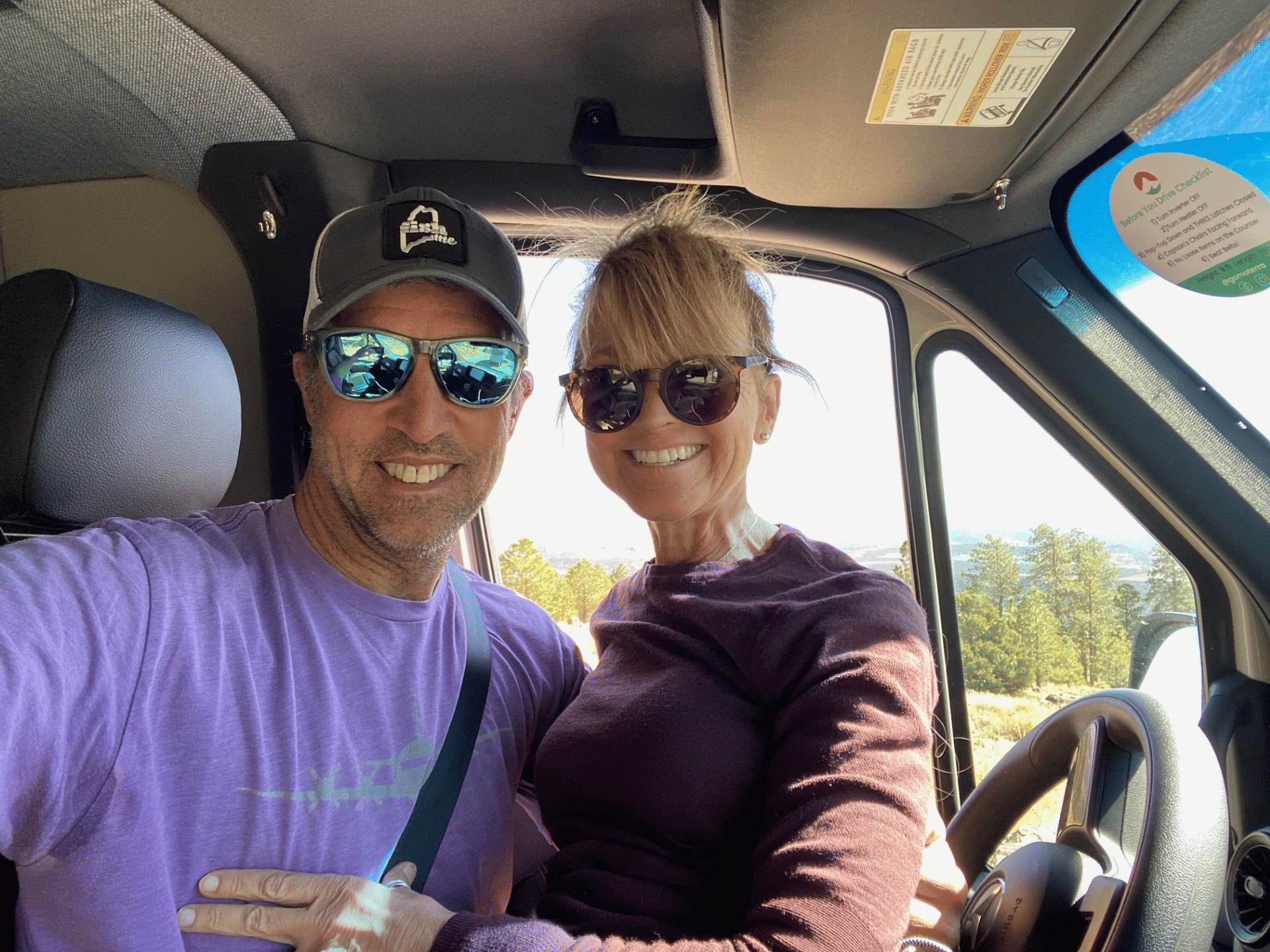
Like, like, I said, we had we had we had some of our best trips. We went out west in camper vans with another couple that were close friends. We did it two years. We were supposed to go on a third and that got canceled.
[00:15:27] - [Speaker 0]
But,
[00:15:28] - [Speaker 1]
they were epic. I mean, we were always close and a tag team and in a crazy way it even brought us closer, which was great and sad at the same time as to why. I mean, not that I ever felt distant or together. We did everything together. And we took it on, you know, for moment number one, I said, this isn't your journey.
[00:15:49] - [Speaker 1]
It's ours, you know? So if she wasn't feeling great, I wouldn't be like, See you. I'm gonna go out and have fun. You know, go play golf or go out in the boat. It's because
[00:16:01] - [Speaker 0]
you're a good guy, Dave. Holy man.
[00:16:03] - [Speaker 1]
Try to be, but it's not fair. Awesome.
[00:16:06] - [Speaker 0]
No, it's not.
[00:16:07] - [Speaker 1]
You know, it's not But
[00:16:08] - [Speaker 0]
not everyone does that.
[00:16:09] - [Speaker 1]
No, yeah. That's what we, know, kind of, I mean, I did not miss an appointment. I think I missed like two out of three years. So because that's one thing I think it's really important is to be there. You hear things very differently even though your doc is telling you the same thing.
[00:16:30] - [Speaker 1]
Know, and as I always said to myself, I mean, and kudos to you in building your village that I couldn't imagine somebody going through this by themselves. Even just like dealing with the fear of the financial implications at first. I mean, until I learned, I'm like, this is gonna wreck us.
[00:16:49] - [Speaker 0]
Like
[00:16:51] - [Speaker 1]
in short order. Everyone, you know, family's like, we'll support you. And thank goodness we had good insurance through work. But that was just like, are you fucking kidding me? This costs me $50,000 a month price tag for a pill?
[00:17:07] - [Speaker 1]
I mean
[00:17:09] - [Speaker 0]
It's insane.
[00:17:10] - [Speaker 1]
It's insane.
[00:17:10] - [Speaker 0]
It's insane. I had that little fear as well going I through mean they told me one of my treatments was like 60 to $90 a treatment and they weren't gonna cover chemo but And they were gonna cover I was like, okay, I'll pay for chemo out of pocket I guess.
[00:17:23] - [Speaker 1]
It's a
[00:17:24] - [Speaker 0]
dime a dozen now.
[00:17:25] - [Speaker 1]
Right, right.
[00:17:26] - [Speaker 0]
But yeah, that is a weird part of it that people don't, I don't think they think about it you're as going through somebody, people who haven't gone through it because people think, Oh, you're covered. You got insurance, it's fine.
[00:17:36] - [Speaker 1]
Right. Not always. Yeah, I have to say that New England Cancer here in Maine were phenomenal with they have an advocate, a financial advocate. And they worked with me on the front end to work with the supplier of the pills for the supplemental insurance. So thank goodness, you know, we were extremely fortunate that that didn't become a hurdle.
[00:17:59] - [Speaker 0]
Right.
[00:18:00] - [Speaker 1]
So to speak, because you're like, how do you balance? But it did in the end where there was one treatment that when she got really sick, they're like, This is plan A, but insurance wouldn't cover it. So you're like, So plan B because we can't afford it? And I asked them outside of Jen being there like, Tell me what it is. Let's do it.
[00:18:24] - [Speaker 1]
And they wouldn't even tell me the number because they said it's, you know, just unattainable. So yeah. Wow. Yeah. Yeah.
[00:18:32] - [Speaker 0]
What do you wish like more people knew about what it's like being a spouse and a caregiver? Maybe it's a lot of things, but
[00:18:41] - [Speaker 1]
Yeah, just that's where I think it's really an independent thing where there's no wisdom that I can bestow because you know, I was not a physical caregiver when Jen, you know, when it went bad, it went bad really quickly. So we went from, okay, we're going to do plan C to then she was having seizures and, you know, into the hospital. Yeah. And then it went from that to, well, quality of life because Dana was getting married and that was her goal to make it to her wedding, which she didn't. But so then you're looking at six months of hospice and stuff like that.
[00:19:29] - [Speaker 1]
And how do you do that?
[00:19:31] - [Speaker 0]
Yeah.
[00:19:31] - [Speaker 1]
And it sounds horrible to say it, but thank God we never, you know, we were in the hospital then it was, I want to go home. And then she passed four days later. So it went from, we could be doing this long term, how are we going to live life in hospice to it not being that. I don't know if I've answered your question. No, you did.
[00:19:54] - [Speaker 1]
But it's you got to find people to lean on. And there are wonderful groups out there. I mean, here in Maine, there's the Dempsey Center and stuff like that. But that didn't work for us. We went to one group session and it was just like, Oh boy, you know, is not because everyone has their story and they all people get angry and sad and you have joy throughout the whole thing but it's a nasty roller coaster.
[00:20:24] - [Speaker 0]
It's a battle. Yeah. I mean, mentioned this in the beginning. Is there something that someone said or maybe did that really helped or maybe didn't help? Maybe one of
[00:20:34] - [Speaker 1]
the Yeah, first, a couple instances when we told some close friends about it, they said, You gotta talk to Jamie, who's a friend of theirs who had been living with cancer for twenty years.
[00:20:47] - [Speaker 0]
So
[00:20:47] - [Speaker 1]
I call him out of the blue, my friend had given him a heads up, and they brought us over, like, the next day and just sat with us and talked and kind of gave some a little bit of light. Like, listen, I've been dealing with this twenty years. I thought it was on my deathbed, yada yada. So anything I can do. So that was real important.
[00:21:09] - [Speaker 1]
And then after Jen had passed and you're just like, How am I dealing with this? And everyone asks you, How you doing? How you doing? And it was at a point that I was like feeling okay and feeling guilty about it. Like, why am I okay?
[00:21:29] - [Speaker 1]
Five months and feeling like I'm okay. And a gentleman who we both won't say his name, mean out of privacy who had been through it years before, saw me in an event and he came up and said, I hear you're part of the club. I'm so sorry. You know, anything I can do? And he just kinda knew, like, the stage that I was at.
[00:21:55] - [Speaker 1]
And he's like, Dave, it's it's it's okay to be okay and tell somebody I'm okay today. I mean, everyone out of respect respect and and caring caring asks asks you you and wants to find out, but some are doing it to heal themselves. Some don't know how to do it. I had a very good friend say to me, I don't know how to support you, which I appreciated because That's interesting. Yeah.
[00:22:20] - [Speaker 1]
It was real interesting. And then there's some people who do stuff and it just fucking lands the wrong way.
[00:22:25] - [Speaker 0]
Yeah.
[00:22:25] - [Speaker 1]
And you're just like, I can't believe you just said that to me. Yeah. Or you sent me this thing that is supposed to cheer me up and I never cheer us would. Yeah. Yeah.
[00:22:35] - [Speaker 1]
So, yeah.
[00:22:37] - [Speaker 0]
What advice?
[00:22:37] - [Speaker 1]
So give people grace.
[00:22:39] - [Speaker 0]
Yeah.
[00:22:39] - [Speaker 1]
Yeah. You know, yourself grace as somebody going through it and find what works for you. And if it works for you, it's the right thing. And what worked for somebody else could very well be the wrong thing. So Yep.
[00:22:54] - [Speaker 1]
And people have opinions, right?
[00:22:57] - [Speaker 0]
And they all want to share.
[00:22:58] - [Speaker 1]
And they all want to share, right? I mean, yeah. Yeah, they all want to share. Even now, you know, get back on the horse or it's time or you're too young and yeah, it's a process.
[00:23:11] - [Speaker 0]
And you sort of, you've sort of talked about this already and right now, frankly, but how do you start to walk forward without Jen? You know what I mean? Like how do you start to transition, I guess? And I know it doesn't happen immediately, but it must be
[00:23:27] - [Speaker 1]
so challenging. It's baby steps. I mean, listen, you have a lot little, the three years I had a lot of time to think it. I wouldn't you know, it's not something we discussed a lot. I mean, surely we did, but I was I was very much like, we're not gonna focus on when you're not here.
[00:23:43] - [Speaker 1]
Mhmm. Because I don't believe that's gonna happen. You know, everyone's telling us otherwise, but we got to do the work. So we'll make it work. I mean, and we did.
[00:23:52] - [Speaker 1]
I mean, life changed and it became very scheduled. And we lived life in three week increments for two years, you know, based upon she had to go to chemo every three weeks. It's just like it's going to knock the shit out of her. So we, you know, you get into it. But, you know, I lost a big part of her three years ago.
[00:24:13] - [Speaker 1]
So when people say, you know, Oh, it's been five months, it's been a
[00:24:19] - [Speaker 0]
lot longer than that.
[00:24:24] - [Speaker 1]
You know, with help of the therapist and just having friends supportive who say, you know, at some point, you know, we know there may be someone else, whatever that might mean, and we'll welcome that individual. Right? So that was a big thing. Navigating the kids is a different story, right? Because I lost my wife, they lost their mom.
[00:24:52] - [Speaker 0]
Yeah. So it's different. It's definitely different. Yeah. And how are they doing?
[00:24:57] - [Speaker 0]
If you don't mind me asking
[00:24:58] - [Speaker 1]
about that. They're, you know, I tell everyone we're as good as as we can be. Yeah. And they're all different. So you try to bellwether each one.
[00:25:12] - [Speaker 1]
But, yeah, they're good. And we you know, and I try to talk about it as much as we can. You know, I talk with my daughter every day. My youngest still lives around, so he's here and Jack is great as well. So, you know, big we talked about this a little bit before.
[00:25:34] - [Speaker 1]
It hits you when you don't think it hits you. Right? I mean, we're talking about shrinking the show on Apple TV. And that's it's like I'm watching my life Right. Unfold because of the way, you know, the gentleman lost you know, the key character lost his wife in a car accident.
[00:25:51] - [Speaker 1]
But
[00:25:52] - [Speaker 0]
Yeah. It's just like, fuck.
[00:25:54] - [Speaker 1]
Yeah. Great show. Laughing one second, but
[00:25:56] - [Speaker 0]
Crying.
[00:25:57] - [Speaker 1]
There's one a couple episodes ago that, you know, they're night watching and laughing and then all of a sudden, you know, myself crying looking at the dog. Yeah. I was like, Jerry, help me here. So it'll be hard. Yeah.
[00:26:15] - [Speaker 1]
I can't imagine ever introducing someone else to my family, especially my kids. But I also know that there's no guarantees in life, and we're young. And we see what your elders are going through in the ages of eighties and the shit they deal with and health issues. So it's like, gotta figure out. I said from day one, I'm not sitting in this house and wallowing in the dark.
[00:26:44] - [Speaker 1]
Right? So I've said yes to everything. Right? Which is very refreshing after saying no for three years, really reconnecting with friends who were always there but just reconnecting in a different way and enjoying their friendship and really being intentional with them and family. Yeah, fun and joy.
[00:27:11] - [Speaker 0]
You know, it's fun. I'm so glad you said that because I was gonna bring it up if you didn't, because I remember for Jen's celebration of life, I found out through Ed and he had said that this was like this organic thing because you didn't wanna, you weren't sending out invites to everyone.
[00:27:24] - [Speaker 1]
Yeah, I know.
[00:27:25] - [Speaker 0]
And I said to Ed, I said, because I hadn't seen you in all summer, I think. And I said, How's he doing? He goes, Well, I think he's just saying yes to everything. I was gonna bring it up because, yeah.
[00:27:35] - [Speaker 1]
Yeah, mean, within reason. I know, I know, I But know. But, yeah. So that's been nice to be able to enjoy a wider network
[00:27:47] - [Speaker 0]
Yeah.
[00:27:47] - [Speaker 1]
Of people and things to do. But it's still the core kind of taking care of you, you know, and you just have to be comfortable being the seventh if they're three couples, right? And they're such good friends that I don't mind it, but it's great. But then you go home to empty house.
[00:28:04] - [Speaker 0]
Yeah.
[00:28:04] - [Speaker 1]
And so then it hits again, right? Yeah. It's a little bit of a roller coaster still, so.
[00:28:10] - [Speaker 0]
So if Jen were sitting here today.
[00:28:12] - [Speaker 1]
Yeah.
[00:28:13] - [Speaker 0]
What do you think she'd say about your journey together through all that?
[00:28:17] - [Speaker 1]
That we were together. You know? I don't think she ever felt alone, and
[00:28:24] - [Speaker 0]
I would not do that. So that's what she would say.
[00:28:29] - [Speaker 1]
I hope. I'm pretty sure.
[00:28:31] - [Speaker 0]
Yeah. Yeah. She wants the best for you, of course.
[00:28:35] - [Speaker 1]
Yeah. Right. Yeah. In the end, you know, I mean, yeah. I mean, you know, we could never imagine ourselves with anyone else, but she had the grace to kind of write me a letter.
[00:28:49] - [Speaker 1]
So I'll just kind of leave that at that.
[00:28:51] - [Speaker 0]
Yeah.
[00:28:51] - [Speaker 1]
As she did the kids.
[00:28:52] - [Speaker 0]
You
[00:28:53] - [Speaker 1]
know, early on, early on before we got to the end she, you know, that was part of her healing and process and so there were letters. There are letters to grandkids.
[00:29:07] - [Speaker 0]
Wow. Yeah. Which we have none. Well, here's to Jen.
[00:29:13] - [Speaker 1]
Yeah, thanks.
[00:29:14] - [Speaker 0]
Thank you for doing this. Yeah, absolutely. Absolutely. So coming up next on Après Cancer podcast, we are gonna do the Power of We episode, which is a poem that talks about your family, your support system, and what that looks like. It's a poem that really resonated with me during my cancer journey.
[00:29:34] - [Speaker 0]
So I'm gonna have my power of we on, which is a group of crazy friends who really supported me as a single woman going through it. And so you'll get to learn about what it was like for them to become a support system for a friend. So stay tuned, tune in, watch it, listen, whatever, and hope you learn something. Cheers.